
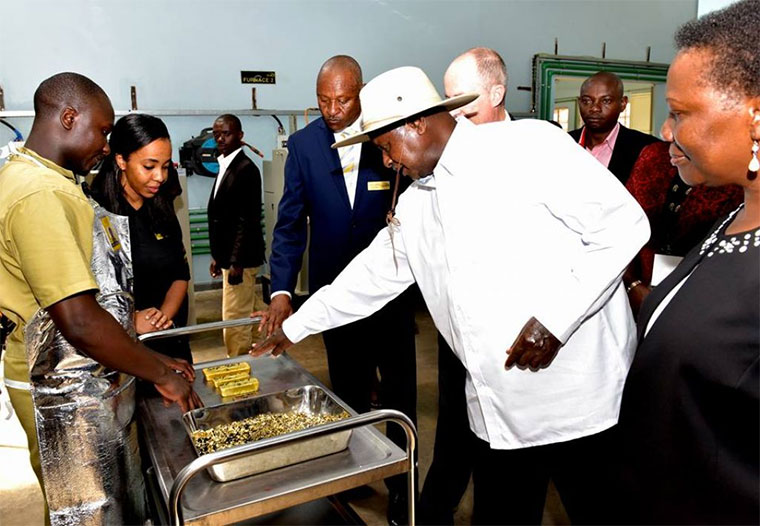
Requirements to Export Gold from Uganda: Licenses, Taxes & Documents
Requirements to Export Gold from Uganda: Exporting gold from Uganda is fully legal but strictly regulated to ensure transparency, combat illicit trade, and promote sustainable mining practices.
Only licensed exporters, such as registered mining companies, authorized dealers, or holders of a Mineral Dealer’s License (MDL), are permitted to engage in this activity.
This comprehensive guide covers the essential requirements to export gold from Uganda, including necessary licenses, documents, taxes, and step-by-step procedures.
Whether you’re a local miner, foreign investor, or international buyer, understanding these rules is crucial for compliance and successful transactions. We’ll also address common pitfalls and tips for due diligence.
Is It Legal to Export Gold from Uganda?
Yes, exporting gold from Uganda is legal, provided all regulatory requirements are met. The country’s mining and mineral export laws are governed by the Mining and Minerals Act, 2022, which replaced the outdated 2003 Act to modernize the sector and align with international standards. This legislation emphasizes responsible sourcing, value addition, and revenue generation for the government.
The primary oversight body is the Ministry of Energy and Mineral Development (MEMD), which regulates exploration, mining, and exports through its Directorate of Geological Survey and Mines (DGSM).
Compliance is non-negotiable; failure to adhere can result in severe penalties, including fines, license revocation, or criminal charges under anti-money laundering laws. Uganda’s push for formalization has led to increased exports, with gold becoming a top earner, reaching billions in value annually.
This framework not only protects the environment but also builds investor confidence by ensuring traceability from mine to market.
Who Is Allowed to Export Gold from Uganda?
Gold exports are restricted to entities with proper authorization to prevent smuggling and illegal trade. Eligible parties include:
- Licensed Gold Exporters: Holders of a Mineral Dealer’s License (MDL) issued by DGSM, which allows buying, selling, and exporting minerals.
- Registered Mining Companies: Those with a Mining Lease or License under the MEMD, enabling them to extract and export their own production.
- Authorized Gold Dealers and Refiners: Entities with a Refining License, often required for processing raw gold into exportable forms like bars.
Individuals without these licenses are prohibited from exporting gold. Foreigners can participate but must partner with Ugandan-licensed entities or obtain approval through joint ventures.
Eligibility requires proof of financial capability, a clean criminal record, tax compliance via a Uganda Revenue Authority (URA) Tax Identification Number (TIN), and sometimes a certificate of good conduct. Recent reforms in 2025 have tightened rules, limiting trade to licensed operators to curb informal dealings.

Key Government Authorities Involved
Several institutions play pivotal roles in overseeing gold exports, ensuring multi-layered checks for compliance and revenue collection:
- Directorate of Geological Survey and Mines (DGSM): Under MEMD, issues licenses, export permits, and oversees mineral assays. They verify origin and purity.
- Uganda Revenue Authority (URA): Handles customs declarations, tax payments, and export levies. They process declarations and ensure fiscal obligations are met.
- Bank of Uganda (BoU): Regulates foreign exchange repatriation, ensuring export proceeds are returned to the country within stipulated timelines to stabilize the economy.
- Uganda National Bureau of Standards (UNBS): Certifies quality and standards, particularly for assays and purity testing to meet international benchmarks.
- Uganda Police and Security Agencies: Involved in anti-smuggling operations and may require security clearances for high-value shipments.
These bodies collaborate to enforce the Mining and Minerals Policy, enhancing Uganda’s reputation in global markets like the London Bullion Market Association (LBMA).
Core Requirements to Export Gold from Uganda
To legally export gold, exporters must fulfill a set of mandatory requirements. Below is a checklist in table format for clarity:
|
Requirement |
Description |
Issuing Authority |
|
Export License (MDL or Equivalent) |
A valid Mineral Dealer’s License or Mining License authorizing export activities. |
DGSM/MEMD |
|
Valid Trading License |
General business license for commercial operations. |
Local Government or URA |
|
Certificate of Origin |
Proves the gold’s Ugandan source, preventing conflict minerals. |
DGSM |
|
Mineral Analysis & Assay Report |
Certifies purity (e.g., minimum 99.9% for refined gold) and composition. |
Accredited Labs/UNBS |
|
Tax Clearance Certificate |
Confirms all taxes and royalties are paid. |
URA |
|
Export Permit |
Specific permission for each shipment, including Form 52. |
DGSM |
|
Customs Declaration |
Electronic submission via URA’s ASYCUDA system. |
URA |
|
Buyer Sales Contract/Invoice |
Detailed agreement with the international buyer, including proforma invoice. |
Exporter/Buyer |
These ensure traceability and compliance with OECD Due Diligence Guidance for Responsible Mineral Supply Chains.
Step-by-Step Gold Export Procedure
Exporting gold involves a structured process to minimize risks. Here’s a step-by-step guide:
- Obtain Exporter License: Apply for an MDL or Refining License via DGSM’s online portal, submitting ID, financial proof, and tax clearance.
- Assay and Valuation: Have the gold tested at an accredited lab for purity and value assessment.
- Pay Taxes and Royalties: Settle export levy ($200 per kg for refined gold) and any applicable fees at URA.
- Secure Export Permit: Submit Form 52, assay report, and proof of payment to DGSM for approval.
- Customs Clearance: File declaration with URA, including packing list and invoice; undergo inspection.
- Shipment: Use approved channels like air cargo from Entebbe International Airport, with secure packaging and insurance.
This process typically takes 7-14 days if all documents are in order.
Taxes, Royalties & Fees
Exporting gold incurs several fiscal obligations to support national development. Key charges include:
- Export Levy: $200 per kilogram on refined gold, payable to URA. This was introduced in recent years to capture value from the booming sector.
- Royalties: Waived for gold produced in Uganda to encourage local processing, but applicable to imported minerals (typically 5-10% based on value).
- Withholding Tax: 6-15% on payments to non-residents, depending on the transaction.
- Assay and Certification Costs: Range from $50-200 per batch, covering lab fees.
Note: Figures can vary; always verify with URA for the latest rates, as amendments occur annually (e.g., Tax Amendment Bills 2025).
Gold Assay & Certification Process
Assaying ensures gold meets export standards, typically requiring 99.9% purity for bullion. The process involves:
- Submitting samples to DGSM-accredited labs or UNBS facilities in Kampala.
- Testing for karat levels e.g., 22K or 24K gold , using fire assay or XRF methods.
- Obtaining a Certificate of Analysis detailing weight, purity, and impurities.
This transparency combats fraud and aligns with global anti-conflict mineral initiatives, boosting buyer trust.
Shipping & Transportation Requirements
Gold shipments must prioritize security due to high value:
- Approved Routes: Primarily air cargo via Entebbe International Airport; sea or road for bulk, but rare.
- Secure Packaging: Tamper-proof containers meeting IATA standards, with seals.
- Insurance: Mandatory full-value coverage against loss or theft.
- Courier vs. Freight: Use licensed couriers like Brinks or freight forwarders; avoid informal methods.
- Chain of Custody: Documentation tracking from source to destination, including airway bills.
Compliance reduces risks and ensures smooth customs at destination ports.
Required Documents Checklist
For quick reference:
- Export License/MDL
- Certificate of Origin
- Assay Report/Certificate of Analysis
- Commercial Invoice & Packing List
- Tax Clearance Certificate
- Export Permit (Form 52)
- Customs Declaration Form
- Airway Bill or Bill of Lading
- Sales Contract with Buyer
Keep originals and copies; digital submissions via portals speed up processing.
Common Mistakes to Avoid When Exporting Gold
Avoid these pitfalls to prevent delays or penalties:
- Using unlicensed agents or middlemen, which can lead to scams or legal issues.
- Missing key documents like assay reports, resulting in rejected permits.
- Under-declaring gold value to evade taxes, risking audits and fines.
- Ignoring repatriation rules, where export proceeds must return via BoU within 90 days.
- Neglecting due diligence on buyers, exposing to fraud.
Proactive compliance extends dwell time and builds long-term success.
Legal & Compliance Tips for Foreign Buyers
International buyers should exercise caution:
- Conduct due diligence: Verify exporter’s MDL and tax status via DGSM portal.
- Insist on verifiable contracts outlining terms, purity, and delivery.
- Use escrow services or letters of credit for payments to mitigate risks.
- Ensure compliance with home country laws (e.g., EU Conflict Minerals Regulation).
- Partner with Ugandan firms for joint ventures to navigate local rules.
These steps protect investments and promote ethical sourcing.
FAQs about Requirements to Export Gold from Uganda
Can foreigners export gold from Uganda?
Foreigners cannot export independently but can through licensed Ugandan entities or joint ventures, subject to MEMD approval.
How long does it take to export gold from Uganda?
Typically 7-14 days, depending on document preparation and approvals from DGSM and URA.
Is Uganda gold export tax-free?
No; an export levy of $200 per kg applies, though royalties may be waived for locally produced gold.
What purity of gold can be exported?
Refined gold must be at least 99.9% pure; lower purity may require additional processing.
Which airport is used for gold exports?
Entebbe International Airport is the primary hub for air shipments.
What are the penalties for non-compliance?
Fines, license suspension, or imprisonment for smuggling or tax evasion.
How do I verify a Ugandan gold exporter?
Check licenses on DGSM’s portal and request tax clearance from URA.
Are there any restrictions on gold quantity?
No fixed limits, but each shipment needs individual permits based on declared value.