
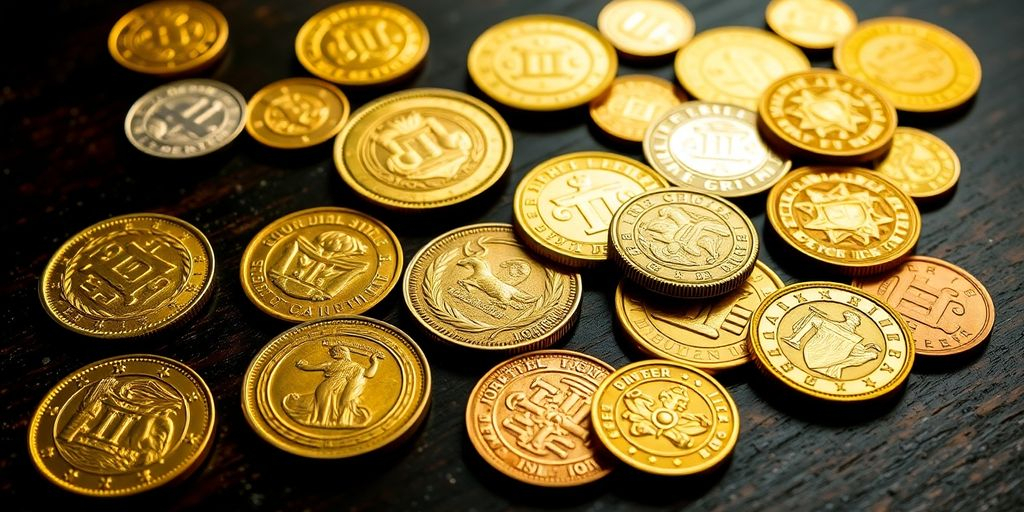
Current 24K Gold Coin Prices & Best Place to Buy them in Africa
Today, the live spot price for gold stands at approximately $4,878 per troy ounce, marking a 2.21% increase from recent sessions. This surge reflects broader market optimism amid easing monetary policies. For 24K coins, prices include premiums, varying by type and dealer.
Popular 1 oz coins:
- Canadian Gold Maple Leaf: Around $5,032, with a 3-5% premium over spot.
- American Gold Buffalo: Approximately $5,242, favored for its iconic design.
- Australian Gold Kangaroo: About $5,012, offering variety in annual motifs.
- Austrian Gold Philharmonic: $5,032, known for musical themes.
Smaller denominations scale accordingly: A 1/2 oz Maple Leaf might cost $2,518, while 1/10 oz versions hover at $563. In Africa, local currencies affect pricing; for instance, in South Africa, a 1 oz coin could equate to R90,000-R100,000 ZAR, depending on exchange rates.
Daily fluctuations are evident: On January 20, gold traded at $4,737 per oz, up $2 from the prior day. Weekly trends show a 9.39% rise, underscoring volatility. Investors should monitor sites like JM Bullion or APMEX for real-time quotes.
What Are 24K Gold Coins?
24K gold coins are minted from nearly pure gold, with a fineness of 999.9 parts per thousand. Unlike lower-karat alloys, such as 22K (91.67% gold) used in coins like the South African Krugerrand, 24K variants offer unadulterated value tied directly to the spot price of gold.
This purity makes them softer and more prone to scratches, but it also enhances their appeal for investors prioritizing intrinsic worth over durability.
Common denominations include 1 ounce (troy oz), 1/2 oz, 1/4 oz, and 1/10 oz, with weights standardized to ensure global tradability. Mints worldwide produce these coins, often with legal tender status, though their market value far exceeds face value.
For instance, a 1 oz coin might have a nominal denomination of $50 but trade for thousands based on gold’s spot price. Collectors value them for designs featuring national symbols, historical figures, or wildlife, adding numismatic premium.
In contrast to gold bars, coins carry lower premiums over spot due to mass production but offer better liquidity. They are exempt from VAT in many jurisdictions, making them tax-efficient. As physical assets, they provide security in times of digital financial disruptions, appealing to those wary of fiat currencies.
Factors Influencing 24K Gold Coin Prices
Several dynamics shape gold coin prices. The spot price, determined by London Bullion Market Association (LBMA) fixes, forms the base. As of mid-January 2026, spot gold hovers around $4,700-$4,800 per oz, influenced by U.S. Federal Reserve policies, dollar strength, and global demand. Premiums—added costs for minting, distribution, and dealer margins—typically range 3-8% for 24K coins.
Geopolitical events spike prices; for example, recent Middle East tensions have driven safe-haven buying. Economic indicators like inflation (currently at 5-7% in major economies) and interest rates inversely correlate with gold. Supply disruptions from mines in Africa or Australia can tighten markets.
Demand from Asia, particularly India and China, absorbs much production for jewelry and investment. Central banks, holding over 35,000 tons globally, bolster prices through reserves. Environmental regulations on mining add costs, while recycling meets only 25% of demand.
Cryptocurrencies and stocks compete, but gold’s tangibility wins during downturns. Forecasts for 2026 predict averages of $4,800-$5,200 per oz, with potential highs at $5,500 if recessions deepen.
Popular Types of 24K Gold Coins
Investors have myriad options. The Canadian Maple Leaf, minted by the Royal Canadian Mint, features Queen Elizabeth II (or successors) on the obverse and a maple leaf on the reverse. Its anti-counterfeiting features, like radial lines, enhance security.
The American Gold Buffalo, from the U.S. Mint, replicates the 1913 Buffalo Nickel design with Native American and bison motifs. It’s purely investment-oriented, without alloy for hardness.
Australia’s Kangaroo series changes designs yearly, depicting kangaroos in various poses, adding collectible value. The Perth Mint ensures 99.99% purity.
Other notables include China’s Panda, with annual bear variations, and Britain’s Britannia, symbolizing national pride. In Africa, while pure 24K gold coins aren’t minted locally en masse, imported varieties are available through dealers.
Investment Benefits and Risks
24K gold coins offer diversification, preserving wealth during stock market crashes. Unlike paper assets, they can’t be inflated away. Liquidity is high; coins sell quickly at near-spot prices globally.
Tax advantages include potential capital gains treatment, and storage options range from home safes to vaults. However, risks include theft, storage costs (1-2% annually for vaults), and opportunity costs if gold underperforms equities.
In inflationary 2026, with gold up 41% year-over-year, coins provide a hedge. Experts recommend 5-10% portfolio allocation.
Best Places to Buy 24K Gold Coins in Africa
Africa’s gold-rich landscape offers prime buying opportunities, with competitive prices due to proximity to mines. South Africa emerges as the top destination, boasting a mature market and regulatory framework.
Johannesburg, dubbed the “City of Gold,” hosts reputable dealers like SA Bullion and the South African Gold Coin Exchange (Scoin Shop), where premiums are low—often 2-4% over spot. The Rand Refinery, one of the world’s largest, ensures authenticity.
Gold Reef City Mint in Johannesburg sells directly, with prices like R81,116 for a 1 oz gold coin (equivalent to about $4,500 USD at current rates). African Bullion provides online shopping with secure delivery, ideal for international buyers.
Ghana ranks second for affordability, with Accra’s markets and licensed dealers offering gold from local mines. Prices are among the continent’s lowest due to minimal export duties.
Uganda’s Kampala features 24K Gold Bars Africa Ltd, sourcing from regional producers like DRC and Mali, providing coins at wholesale rates.
Tanzania and Mali also offer bargains, but infrastructure lags. Buyers should verify LBMA accreditation and avoid unregulated markets to prevent fakes. For safety, use insured shipping or vaults.
South Africa’s edge lies in its ecosystem: Easy access, English-speaking services, and integration with global exchanges make it the best overall place.
Conclusion
24K gold coins embody timeless value in a turbulent world. With prices soaring to $4,878 per oz in January 2026, driven by economic forces, they offer robust investment potential.
Africa’s markets, particularly South Africa, provide the best buying opportunities with low costs and reliability. As gold’s allure endures, strategic acquisitions here could yield substantial returns. Always consult professionals and diversify wisely.