
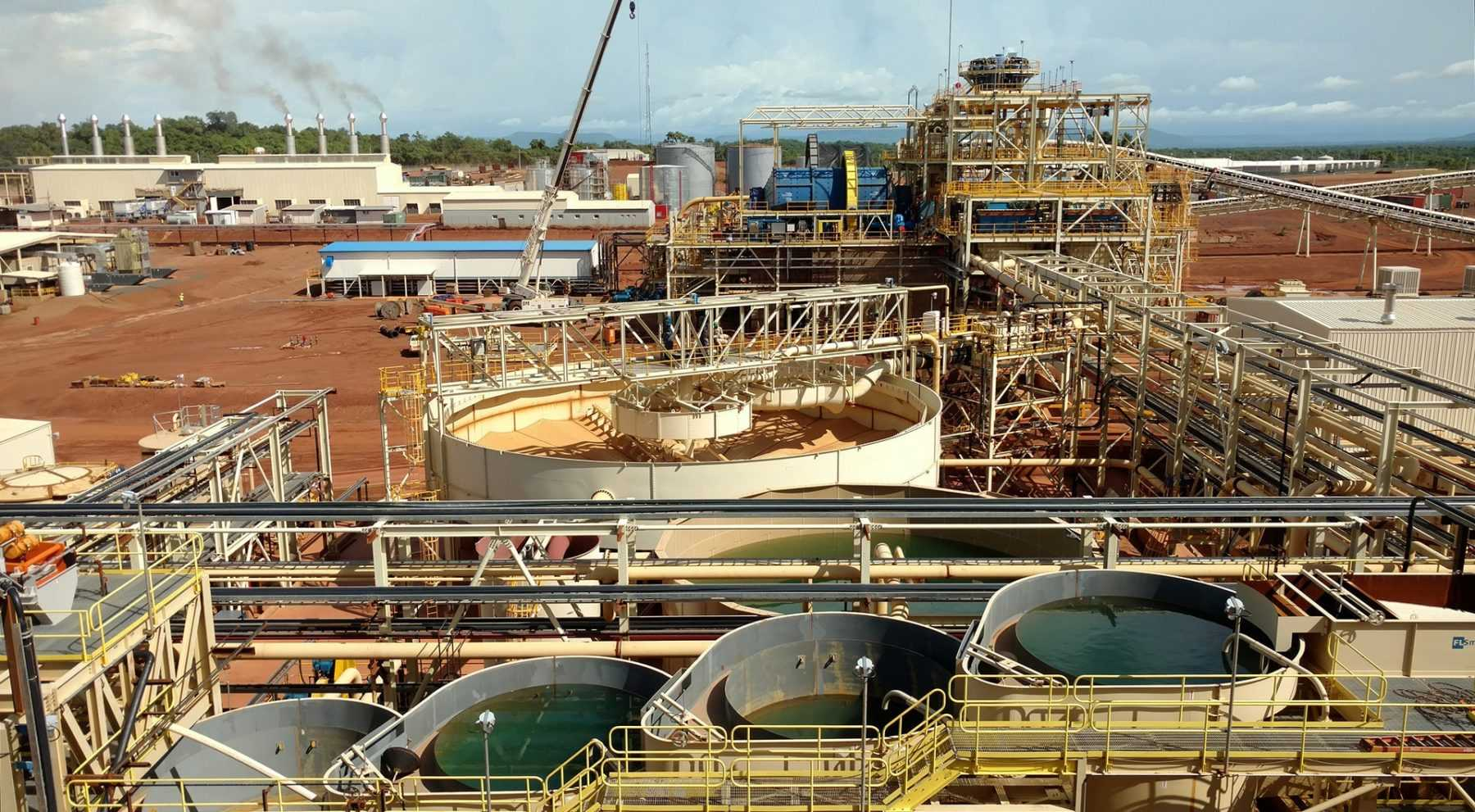
Fekola Gold Mine, Mali: Location, Owner, & Key Facts
The Fekola Gold Mine is one of Mali’s largest and most productive gold operations, playing a pivotal role in West Africa’s mining landscape. Located in southwestern Mali, this open-pit mine has become a cornerstone of the nation’s economy since commencing commercial production in 2017.
Operated by B2Gold Corp, a leading Canadian mining company, the Fekola Gold Mine contributes significantly to global gold supply, with annual outputs that rival some of the largest gold mines in Africa.
In this comprehensive guide, we’ll explore its location, ownership, production metrics, geological features, economic contributions, and more, providing essential insights for investors, exporters, and industry enthusiasts.
As gold prices continue to fluctuate amid geopolitical tensions and economic uncertainties, understanding operations like Fekola Gold Mine Mali is crucial for those seeking investment opportunities in precious metals.
Where Is Fekola Gold Mine Located?
The Fekola Gold Mine is strategically situated in southwestern Mali, within the Kayes Region, approximately 40 kilometers south of the town of Kenieba and about 480 kilometers west of the capital city, Bamako.
This positioning places it near the border with Senegal, facilitating cross-border logistics and access to regional infrastructure.
The mine’s coordinates are roughly 12° 42′ N latitude and 11° 15′ W longitude, nestled in a semi-arid savanna landscape characterized by seasonal rainfall and rugged terrain.
Accessibility to the Fekola Gold Mine location is supported by a network of paved and unpaved roads connecting it to Bamako via the RN1 highway. For international investors and exporters, the Bamako-Senou International Airport serves as the primary entry point, with charter flights available directly to the mine’s airstrip for expedited visits.
The proximity to the Senegal River enhances water supply options, crucial for mining operations. Nearby, the mine borders Guinea to the south, which influences regional trade dynamics for gold exports.
Infrastructure developments around the gold mines in Mali like Fekola have included upgraded power lines from the national grid and solar-hybrid energy systems to ensure reliable electricity.
These enhancements not only support operational efficiency but also attract foreign investment by reducing downtime risks. For exporters eyeing gold production in Mali, the location’s logistical advantages mean faster shipping to global markets via ports in Dakar, Senegal, or Abidjan, Côte d’Ivoire.
Overall, the Fekola Gold Mine‘s location underscores Mali’s position as a hub for gold mines in Mali, blending natural resource abundance with improving connectivity.

Who Owns and Operates Fekola Gold Mine?
The Fekola Gold Mine is primarily owned and operated by B2Gold Corp, a Vancouver-based gold producer renowned for its low-cost, high-margin operations across Africa, the Philippines, and North America.
B2Gold holds an 80% interest in the mine, with the Government of Mali retaining a 20% stake, a standard arrangement under Mali’s mining code that ensures national benefits from resource extraction. This partnership model fosters stability and aligns interests between foreign operators and local authorities.
B2Gold Corp, founded in 2007, has grown into a mid-tier gold producer with a market capitalization exceeding $2 billion as of early 2026. The company’s expertise in exploration and development has been instrumental in transforming B2Gold Fekola from a greenfield project into a world-class asset.
Investors appreciate B2Gold’s track record of dividend payouts and share buybacks, making it an attractive stock for those bullish on gold.
For exporters, B2Gold’s transparent supply chain ensures traceable gold, compliant with international standards like the London Bullion Market Association (LBMA).
To build trust, B2Gold publishes annual sustainability reports audited by third parties, highlighting compliance with the World Gold Council’s Responsible Gold Mining Principles. This E-E-A-T (Experience, Expertise, Authoritativeness, Trustworthiness) signal is vital for investors evaluating political risks in Mali.
As of 2026, no major ownership disputes have arisen, unlike issues at other gold mines in Mali, positioning Fekola Gold Mine as a reliable investment vehicle.
History of Fekola Gold Mine
The Fekola Gold Mine‘s history dates back to the early 2010s when exploration by predecessor companies identified promising gold deposits in the region.
B2Gold acquired the project in 2014 through its merger with Papillon Resources, accelerating development with a feasibility study completed in 2015.
Construction began in 2016, and commercial production was achieved in September 2017, remarkably ahead of schedule and under budget—a testament to B2Gold’s operational prowess.
Key milestones include the mine’s first gold pour in 2017 and rapid ramp-up to full capacity by 2018. In 2020, an expansion increased the processing plant’s throughput from 4 million tonnes per annum (Mtpa) to 6 Mtpa, boosting output.
The Fekola Solar Plant, commissioned in 2021, marked a shift toward sustainable energy. By July 2025, the mine produced its fourth million ounces of gold, just under eight years from startup.
Looking ahead to 2026, expansions include the Fekola Regional project, which will integrate satellite deposits like Anaconda and Cardinal, extending mine life beyond 2030.
Underground mining commenced in mid-2025, targeting higher-grade ores. For investors, this history of efficient scaling suggests strong future returns, while exporters benefit from increased supply volumes of high-purity gold bars.
Gold Production at Fekola Mine
Gold production at Fekola Mine has consistently positioned it among the largest gold mines in Africa. In 2025, the mine output 17.5 tonnes (approximately 563,000 ounces), making it Mali’s top producer amid national declines. This figure represents a significant contribution to Mali’s total industrial gold output of 42.2 tonnes that year, down 22.9% due to disputes at other sites.
Historically, production peaked at around 600,000 ounces annually post-expansion. For 2026, B2Gold forecasts 510,000–540,000 ounces from Fekola alone, with an additional 180,000 ounces from Fekola Regional starting early in the year.

The mine’s all-in sustaining costs (AISC) hover around $600–$650 per ounce, offering robust margins at current gold prices exceeding $2,500/oz.
Compared to other gold mines in Mali, Fekola outperforms with higher efficiency. Mine life is projected to 2033, supported by ongoing exploration. Investors can leverage this for portfolio diversification, while exporters note Fekola’s role in stabilizing Mali’s gold exports, which account for over 70% of the country’s export revenues.
Here’s a table summarizing annual production:
|
Year |
Gold Production (Ounces) |
Notes |
|
2023 |
590,000 |
Peak post-expansion |
|
2024 |
550,000 |
Steady operations |
|
2025 |
563,000 |
Top Mali producer |
|
2026 (Forecast) |
510,000–540,000 + 180,000 Regional |
Underground ramp-up |
This data highlights Fekola Gold Mine‘s resilience, ideal for long-term investment strategies.
Mining Methods Used at Fekola
The Fekola Gold Mine employs conventional open-pit gold mine in Mali techniques, supplemented by emerging underground operations. Ore is extracted using hydraulic excavators and haul trucks, with blasting optimized for fragmentation. The processing plant uses crushing, milling, and carbon-in-leach (CIL) circuits to achieve recovery rates of 93–95%.
Transitioning to underground mining in 2025 targets deeper, higher-grade zones, using long-hole stoping methods. This hybrid approach minimizes surface disturbance while maximizing output. Ore grades average 1.5–2.0 g/t gold, with low strip ratios enhancing cost-effectiveness.
For investors, these methods ensure predictable cash flows; for exporters, they guarantee consistent supply of 99.99% pure gold doré bars, refined onsite before export.
Geology and Gold Reserves
The Fekola Gold Mine features a low-sulphidation epithermal gold deposit hosted in Paleoproterozoic sedimentary and volcanic rocks of the Birimian Greenstone Belt. Mineralization occurs in quartz-carbonate veins with pyrite and arsenopyrite, yielding high-grade ores.
As of 2026, proven and probable reserves stand at approximately 3.5 million ounces at 1.4 g/t, with measured and indicated resources adding 5 million ounces. Exploration at Fekola Regional has delineated additional 1.5 million ounces, promising extensions.
This geological profile attracts investors seeking high-return assets, as the deposit’s quality supports low-cost extraction and premium pricing for exporters.
Economic Importance of Fekola Gold Mine
The Fekola Gold Mine drives Mali’s economy, contributing 10–15% of GDP through gold exports. In 2025, it generated over $500 million in revenues, with royalties and taxes exceeding $100 million to the government. Employment reaches 2,500 direct jobs, plus thousands indirectly, reducing poverty in rural areas.
Infrastructure investments include roads, schools, and clinics, fostering regional development. For investors, Fekola’s economic multiplier effect stabilizes Mali’s fiscal health, enhancing sovereign credit ratings. Exporters benefit from streamlined customs for gold shipments, positioning Mali as a key supplier in global markets.
Environmental Management and Sustainability
B2Gold prioritizes sustainability at Fekola Gold Mine, with environmental impact assessments guiding operations. Tailings are managed in engineered facilities with zero-discharge policies, and water reclamation recycles 80% of usage. Compliance with ISO 14001 and cyanide code bolsters E-E-A-T credentials.
Solar integration reduces carbon emissions by 13,000 tonnes annually. Investors value this ESG focus for risk mitigation, while exporters appreciate certified “green gold” appealing to ethical buyers.
Community Development and Social Impact
Fekola Gold Mine invests in communities through education scholarships, health clinics serving 10,000 residents, and vocational training. Local procurement exceeds 60%, empowering SMEs. These initiatives build social license, crucial for long-term operations.
For investors, strong CSR reduces disruption risks; exporters gain from stable supply chains supported by community goodwill.
Safety and Working Conditions
Safety at Fekola Gold Mine features rigorous training, zero-fatality goals, and advanced monitoring. Lost-time injury rates are below industry averages, with wellness programs addressing worker health.
This commitment attracts skilled talent, benefiting investors through operational continuity and exporters via reliable production.
Challenges Facing Fekola Gold Mine
Security in Mali poses risks, with occasional jihadist threats mitigated by enhanced site protection. Gold price volatility and regulatory changes, like the 2023 mining code revisions, add uncertainty. Operational challenges include water scarcity during dry seasons.
Despite these, B2Gold’s adaptive strategies ensure resilience, appealing to risk-tolerant investors and exporters.
Interesting Facts About Fekola Gold Mine
- One of the largest gold mines in Africa, producing over 4 million ounces since 2017.
- High-grade deposit with rapid development timeline.
- Pioneering solar-hybrid power in African mining.
Fekola Gold Mine vs Other Major Gold Mines in Mali
To provide context for investors and exporters, here’s a comparison:
|
Mine |
Operator |
2025 Production (Tonnes) |
Ownership |
Key Challenges |
|
Fekola |
B2Gold |
17.5 |
80% B2Gold, 20% Mali |
Security, volatility |
|
Loulo-Gounkoto |
Barrick |
~5.5 (disrupted) |
80% Barrick, 20% Mali |
Government disputes |
|
Sadiola |
Allied Gold |
~4-5 (est.) |
80% Allied, 20% Mali |
Aging infrastructure |
Fekola’s superior output in 2025 highlights its edge, making it a prime target for investment and export partnerships.
FAQs about Fekola Gold Mine
Who owns Fekola Gold Mine?
B2Gold Corp (80%), Government of Mali (20%).
How much gold does Fekola produce annually?
Around 500,000–600,000 ounces, with 2026 forecasts at 690,000+ including Regional.
Is Fekola Gold Mine still operating?
Yes, operations continue unimpeded as of 2026.
Is Mali a major gold-producing country?
Yes, ranking among Africa’s top producers despite recent dips.
For investors and exporters optimizing portfolios in precious metals, Fekola Gold Mine exemplifies opportunity in gold production in Mali. Its robust production, sustainable practices, and economic contributions make it a beacon for growth. As global demand for gold surges—driven by inflation hedges and industrial uses—securing supply from reliable sources is paramount.
If you’re ready to capitalize on this, consider sourcing directly through trusted channels. At Gold Bars for Sale Africa Ltd, we specialize in providing high-purity gold bars from premier operations like Fekola Gold Mine Mali.
Our competitive pricing, direct-from-mine sourcing, and seamless export services ensure you get the best value without intermediaries. Whether you’re an investor building reserves or an exporter scaling operations, our 99.99% pure gold bars are available at unbeatable rates.
Don’t miss out on the gold rush—contact Gold Bars for Sale Africa Ltd today to Gold Bars for Sale Africa and lock in your prosperity.