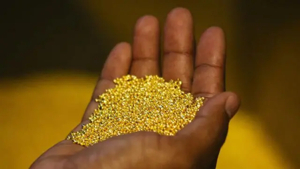
Gold Doré Bars: Complete Guide to Purity, Value & Trade 2026
Gold doré bars represent a vital but often misunderstood stage in the global gold supply chain. These semi-pure bars bridge raw mining output and investment-grade bullion.
Whether you’re a miner, trader, refiner, or investor exploring options, understanding gold dore bars is essential for informed decisions in today’s market (where spot gold hovers around $4,900/oz).
This comprehensive guide covers everything from definition and production to pricing, refining, regulations, and why sourcing gold dore bars through trusted suppliers like Gold Bars for Sale Africa Africa delivers transparency, competitive value, and full compliance.
What Are Gold Doré Bars?
Gold dore bars are semi-pure alloys primarily of gold and silver, produced directly at or near gold mines. The term “doré” comes from the French word meaning “golden” or “gilded,” reflecting their shiny but unrefined appearance.
Unlike finished bullion, gold dore bars are an intermediate product: they contain high but variable gold content, with silver and trace base metals remaining after initial ore processing.
They are neither raw ore nor pure bullion — simply consolidated, transportable metal bars ready for final refining.
Typical appearance: Rough, cast bars with a yellowish-gold hue, often irregular in shape and surface texture due to the casting process.
Weights range from a few kilograms to 25 kg, depending on the mine.
Who produces them?
- Large-scale industrial mines (e.g., in Africa, Australia, Canada, South America) using modern metallurgical plants.
- Artisanal and small-scale miners (ASGM), especially in Africa, where simpler methods yield doré.
Gold dore bars are the standard form in which most newly mined gold enters the market.
They enable secure transport from remote mine sites to specialized refineries worldwide.

Composition & Purity of Gold Doré Bars
Gold dore bar purity typically ranges from 70–95% gold, with the balance consisting mainly of silver (5–30%) and small amounts of copper, zinc, lead, or trace platinum-group metals.
Exact composition depends on the ore body and processing method.
For example:
- African mines often produce doré with 80–92% Au and 8–15% Ag.
- Some deposits yield bars closer to 95% Au with minimal impurities.
Why are doré bars not investment-grade bullion?
Their purity varies between bars (even from the same mine), and they lack the standardized hallmarks, fineness, and liquidity of 99.5%+ bullion.
They require further refining to meet LBMA or COMEX standards.
Purity Comparison Table
| Type | Gold Content | Silver/Content Other Metals | Standardization | Typical Use | Investment Grade? |
|---|---|---|---|---|---|
| Gold Doré Bars | 70–95% (variable) | 5–30% Ag + traces | Low | Refineries & traders | No |
| Gold Bullion Bars | 99.5–99.99% | Minimal | High (LBMA) | Investors, banks, vaults | Yes |
| Gold Coins | 99.9–99.99% | None | Very High | Retail investors | Yes |
How Gold Doré Bars Are Made
The production of gold dore bars follows a multi-step process that extracts and concentrates gold from ore.
- Mining & Ore Extraction — Ore is blasted and hauled from underground or open-pit mines.
- Crushing & Milling — Ore is crushed to fine particles to liberate gold.
- Concentration — Techniques like gravity separation, flotation, or cyanidation produce a gold-rich concentrate.
- Smelting — The concentrate is melted in furnaces with fluxes (borax, silica) at high temperatures (>1,000°C). Impurities form slag, which is skimmed off. Molten precious metals are poured into molds and cooled into doré bars.
Industrial vs. Artisanal Production
- Industrial: High-volume, controlled, lower environmental impact with modern emission controls.
- Artisanal: Often uses mercury amalgamation (now regulated under Minamata Convention) or simpler smelting; higher variability and environmental considerations.
Environmental factors now include tailings management, mercury reduction, and OECD due diligence for responsible sourcing.

Gold Doré Bars vs Gold Bullion Bars
The key differences are summarized below:
| Feature | Gold Doré Bars | Gold Bullion Bars |
|---|---|---|
| Purity | 70–95% (variable) | 99.5–99.99% (consistent) |
| Composition | Au + Ag + base metals | Nearly pure gold |
| Production Stage | Mine-site intermediate | Post-refinery final product |
| Appearance | Rough, unpolished | Smooth, stamped, hallmarked |
| Buyers | Refineries, large traders | Investors, banks, mints |
| Value | Discounted (assay-based) | Full spot + premium |
| Refining Required | Yes | No |

Value & Pricing of Gold Doré Bars
How gold dore is valued is based on assayed gold content, not face value.
Formula (simplified example, spot ~$4,900/oz):
- Gross gold value = (Bar weight in oz × % Au) × Spot price
- Net payable = Gross – Refining fee (1–5%) – Transport – Penalties (for high impurities) + Silver credit
Dore bar pricing formula typically results in a 5–20% discount to spot gold, depending on purity and market conditions.
Example:
- 10 kg bar (321.5 oz) at 85% Au → ~273 oz payable gold
- At $4,900/oz → ~$1.34 million gross
- After deductions → $1.15–1.25 million net (varies by refinery)
Doré trades at a discount because the buyer assumes refining risk and costs.
Refining Process of Gold Doré Bars
Gold dore refining removes impurities to achieve commercial purity.
- Assay → Fire assay or XRF determines exact composition.
- Miller Process (chlorination) → Chlorine gas bubbled through molten doré removes silver/base metals as chlorides. Output: 99.5% gold (fast, cost-effective).
- Wohlwill Process (electrolytic) → For ultra-high purity (99.99–99.999%), gold anodes dissolve in chloroauric acid electrolyte; pure gold plates on cathodes.
Most refineries use Miller first, then Wohlwill for top-grade bars.

Who Buys Gold Doré Bars?
Primary gold dore buyers include:
- Major refineries (Valcambi, PAMP Suisse, Rand Refinery, Asahi Refining, MMTC-PAMP)
- Bullion banks and trading houses
- Large jewelry manufacturers
- Government mints and central banks (indirectly)
They purchase in volume, settle after final assay, and provide logistics support.
Legal, Compliance & Export Considerations
Gold dore export regulations are strict due to AML/KYC, sanctions, and responsible sourcing.
Key requirements:
- Valid export license & certificate of origin
- Full KYC/AML documentation (UBO, source of funds)
- OECD Due Diligence for conflict-free/ethical sourcing (especially from high-risk African regions)
- Assay reports, chain-of-custody documentation
- Country-specific rules (e.g., in many African nations: government approval, taxes paid)
Gold Bars for Sale Africa ensures full compliance, transparent documentation, and conflict-free sourcing to minimize risk for international buyers.
Storage, Transport & Security of Gold Doré Bars
Gold dore transport requires armored logistics, insurance, and tracking.
Bars are typically vaulted in secure facilities with multi-signature access.
High-value shipments use Brink’s or similar specialists.
Risk mitigation includes assay verification before release and insured transit.
Why Choose Gold Bars for Sale Africa for Gold Doré Bars
At Gold Bars for Sale Africa Africa, we specialize in sourcing high-quality gold dore bars directly from licensed African mines and producers.
Our advantages:
- Transparent assays performed by independent labs
- Competitive pricing with minimal margins
- Full compliance support (export permits, KYC, AML, OECD)
- Proven global logistics network to refineries worldwide
- Years of experience supplying refiners and traders
- Flexible contract terms and secure payment options
Whether you need 10 kg or multi-tonne volumes, we deliver reliability, speed, and value that larger intermediaries cannot match.
Ready to secure your supply? Request a quote today → Speak directly with our sourcing experts → Get full compliance assistance.
Frequently Asked Questions About Gold Doré Bars
Are gold doré bars pure gold?
No — they are semi-pure (typically 70–95% Au). Final refining is required.
Can investors buy doré bars?
Rarely for retail investors. They are primarily for commercial refiners due to variable purity and logistics.
How heavy are doré bars?
Commonly 5–25 kg, though smaller bars exist.
Are doré bars legal to export?
Yes, with proper licenses, KYC/AML compliance, and export permits.
What affects doré bar price?
Assayed gold content, current spot price, silver credit, refining/transport costs, and impurity penalties.
Conclusion
Gold doré bars remain the foundation of the global gold industry. Understanding them unlocks opportunities in mining, trading, and refining.
For reliable, compliant supply from Africa, contact Gold Bars for Sale Africa Africa today — your trusted partner in gold dore bars.