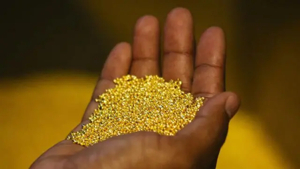
How to Become a Gold Buyer from Africa

How to Become a Gold Buyer from Africa

How to Become a Gold Buyer from Africa: Complete Step-by-Step Guide 2026

How to become a gold buyer from Africa is the question that thousands of investors, traders, jewellery manufacturers, refineries, and commodity professionals ask every year — and in 2026, with gold trading above $4,450 per troy ounce and Africa producing over 25% of the world’s annual gold supply, it has never been a more commercially important question to answer correctly.

Becoming a gold buyer from Africa is entirely achievable for both individuals making personal investment purchases and commercial entities building systematic supply chains.

But it requires understanding a specific set of legal requirements, regulatory frameworks, documentation standards, and due diligence procedures that separate professional, protected transactions from the fraudulent deals that cost unprepared buyers millions every year.

This step-by-step guide tells you exactly how to become a legitimate, legally compliant African gold buyer — whether you are purchasing for personal wealth preservation, resale, jewellery manufacturing, refinery feedstock, or institutional portfolio allocation.


Step 1: Understand What Type of African Gold Buyer You Want to Be

Before taking any practical steps, you must clearly define your gold buying purpose — because the legal requirements, documentation standards, and sourcing approaches differ materially depending on your buying category:

Personal Gold Buyer from Africa

In most African countries, individuals can purchase gold without a specific licence for personal use, provided they buy from licensed dealers and comply with export regulations if transporting the gold abroad. If you are an individual investor wanting to buy gold bars or coins from Africa for personal wealth preservation and have them delivered to your home country, you do not need your own African trading licence — but you must purchase through a licensed African gold dealer and comply with your home country’s import regulations.

Best approach: Work with an established licensed African gold dealer (like Buy Gold Bars Africa Ltd) who manages all export documentation and delivers to your address with full customs paperwork.

Commercial Gold Buyer / Trader

If you intend to buy African gold commercially — for resale, export, distribution, or ongoing supply to manufacturers — you need either your own business registration in an African country or a formal commercial relationship with a GoldBod/DGSM/TMAA-licensed African dealer who acts as your authorised supply partner.

Jewellery Manufacturer / Industrial Buyer

Jewellery manufacturers and industrial processors buying African gold doré, bars, or dust as feedstock for manufacturing need commercial supply agreements, reliable assay certification, and volume pricing structures. No personal use exemptions apply.

Institutional / Wholesale Gold Buyer

Refineries, banks, commodity trading firms, and institutional investors sourcing bulk African gold bullion require the most comprehensive documentation — LBMA compliance, OECD conflict mineral certification, and formal supply agreements meeting their institutional compliance standards.


Step 2: Learn Africa’s Gold Regulatory Landscape Country by Country

Every gold buyer from Africa must understand the specific regulatory framework of the country they are sourcing from. Regulations, licensing authorities, taxes, and export procedures differ significantly by country:

Uganda — DGSM Licensing Framework

Gold trading licence: Issued by the Directorate of Geological Survey and Mines (DGSM). Exporters must obtain a gold trading licence, an export permit, a certificate of origin, an assay report verifying gold purity, and a customs declaration form. Exporters must also comply with anti-money laundering (AML) laws. Uganda charges a 5% royalty on gold exports.

Business registration is handled by the Uganda Registration Services Bureau (URSB). Uganda’s gold sector exported a record $5.8 billion in 2025 — making it East Africa’s dominant gold trading hub.

Ghana — GoldBod Framework (Post-May 2025)

Ghana’s gold sector was fundamentally restructured by the Ghana Gold Board Act 2025 (Act 1140), with GoldBod replacing PMMC from May 1, 2025 as the sole authority for ASM gold trading and export. To legally buy gold in Ghana as a foreign commercial buyer, you must register as a GoldBod off-taker or purchase through a GoldBod Licensed Gold Exporter (LGE).

Ghana imposes a 3% withholding tax on gold exports and a 0.5% export levy. All gold traders must register with GoldBod and obtain a Dealer’s Licence.

South Africa — SADPMR and SARS Framework

All gold traders in South Africa must obtain a gold trading licence from the South African Diamond and Precious Metals Regulator (SADPMR). Exporting gold requires approval from the South African Revenue Service (SARS) and the South African Reserve Bank. South Africa applies a tiered royalty of 0.5–5% on gold production value.

South Africa’s Rand Refinery is the continent’s premier LBMA Good Delivery List refinery — the strongest documentation ecosystem for African gold buyers requiring internationally accepted certification.

Tanzania — Mining Commission and TMAA

Tanzania requires an export permit from the Mining Commission and oversight by the Tanzania Mineral Audit Agency (TMAA). Tanzania charges a 6% royalty plus a 1% clearing fee on gold exports. Gold must be assayed by TMAA or accredited laboratories. Tanzania increasingly requires local beneficiation — processing gold domestically before export.

DRC (Congo) — OECD Compliance Critical

Buying gold from the DRC (Congo) requires full OECD Due Diligence Guidance compliance — chain-of-custody traceability meeting Dodd-Frank Section 1502 (US) and EU Conflict Minerals Regulation requirements. Without this documentation, DRC-origin gold cannot legally enter US, EU, or UK supply chains.

Kenya — Ministry of Mining Oversight

Kenya requires gold trading and export licences from the Ministry of Mining, Blue Economy, and Maritime Affairs. Kenya charges a 3% royalty on gold transactions. Unlicensed gold trading in Kenya can result in imprisonment and heavy fines.

24K Gold Bars


Step 3: Register Your Business Legally

Before engaging in any commercial gold buying from Africa, you must register a legal business entity. Requirements vary by whether you register in the African source country or simply in your home country:

Option A: Register a Company in the African Source Country

This gives you the ability to hold local licences and buy directly from miners and aggregators. The process in Uganda:

  1. Uganda Registration Services Bureau (URSB): Register your company with a company name, directors’ details, registered address in Uganda, and paid-up share capital
  2. Uganda Revenue Authority (URA): Obtain a Tax Identification Number (TIN) — mandatory for all licensed traders
  3. Business bank account: Open an account with a licensed Ugandan commercial bank (Stanbic, DFCU, Centenary)
  4. Apply for DGSM mineral dealer’s licence: Submit application with company registration, directors’ KYC, proof of capital, and technical capacity statement

In Ghana, foreign buyers must register with the Registrar General’s Department, acquire a Tax Identification Number, and register with the Ghana Investment Promotion Centre (GIPC) before applying for a GoldBod LGE licence.

Option B: Work Through a Licensed African Supply Partner

For most international buyers, the most practical approach to becoming a gold buyer from Africa without establishing a local company is to formalise a supply relationship with an existing licensed African dealer — like Buy Gold Bars Africa Ltd — who holds all the required licences and manages the complete export process on your behalf. This route:

  • Requires no local company registration
  • Eliminates the cost and complexity of obtaining your own African trading licences
  • Delivers fully documented gold with all required certifications
  • Allows you to focus on your core business (importing, reselling, manufacturing) rather than African regulatory compliance

Step 4: Obtain the Necessary Licences and Permits

If you are establishing your own African gold buying operation (Option A above), these are the specific licences and permits you need:

Mineral Dealer’s Licence (Uganda) / Gold Trading Licence

The Mineral Dealer’s Licence issued by DGSM in Uganda (or equivalent in other countries) authorises you to purchase gold from licensed miners and aggregators within the country. Application requirements typically include:

  • Company registration certificate
  • Directors’ passport copies and proof of address
  • Business bank account details
  • Statement of technical capacity and financial stability
  • Proof of registered business premises

Gold Export Licence

Separate from the trading licence, an export permit is required for each gold consignment leaving the country. In Uganda, this is issued by DGSM. In Ghana, by GoldBod. In South Africa, by SARS. In Tanzania, by the Mining Commission.

The export permit is specific to each shipment — stating the exact weight, purity, declared value, destination country, and exporter details. You cannot use one export permit for multiple shipments.

OECD Compliance Registration (DRC-Origin Gold)

For any gold buying from the DRC (Congo), registration as an OECD-compliant downstream company is essential. This requires implementing an OECD-conformant supply chain due diligence management system, including:

  • Supply chain policy statement
  • Risk management programme
  • Third-party audits of your sourcing chain
  • Annual reporting

Step 5: Build Your African Gold Supply Network

Understanding where to source gold is the core commercial skill of any successful African gold buyer. Your supply options in priority order:

Source 1: Licensed African Refineries (Best Documentation)

Licensed refineries — including Rand Refinery (South Africa), Africa Gold Refinery (Uganda), and Wagagai Mining (Uganda) — provide the highest-quality documentation: LBMA-standard assay certificates, verifiable serial numbers, and production lot traceability. Gold from LBMA-accredited refineries is accepted by every international buyer without re-assay.

How to access: Direct commercial agreements with the refinery’s sales department. Most major African refineries have minimum order requirements (typically 1–5kg for investment bars).

Source 2: GoldBod/DGSM-Licensed Aggregators (Competitive Pricing)

Licensed gold aggregators — companies that buy from multiple artisanal miners and consolidate supply — offer competitive mine-proximate pricing at scale. These aggregators hold all required government licences and provide assay certification and certificates of origin.

How to access: Direct commercial relationships facilitated by your licensed supply partner or through attending verified industry trade events (Mining Indaba, Kenya Mining Week).

Source 3: Established Licensed Dealers (Most Accessible)

Licensed gold dealers like Buy Gold Bars Africa Ltd provide the most accessible route for new African gold buyers — you purchase certified, documented gold from their existing verified stock, with all export documentation prepared and insured delivery arranged. This is the fastest way to begin buying genuine African gold legally.


Step 6: Establish Your Gold Verification and Assay Process

Every gold buyer from Africa needs a systematic approach to verifying the gold they purchase before payment:

Independent Assay — Non-Negotiable

Before paying for any significant African gold purchase, commission an independent assay from an internationally accredited laboratory:

  • SGS (sgs.com) — the world’s most recognised testing organisation, with offices in Ghana, Uganda, Tanzania, South Africa, and Kenya
  • Bureau Veritas (bureauveritas.com) — LBMA-trusted independent assayer with African offices
  • Alex Stewart International — specialist precious metals assayer with Africa presence
  • TMAA-approved laboratories (Tanzania)

The assay must be arranged by you — not the seller. The assay lab must be selected by you, and the test must be conducted or observed by your independent representative. Never accept an assay arranged by the party selling you the gold.

A complete assay report states: exact weight in grams (to three decimal places), fineness (parts per thousand — 999.9 for 24K), silver content percentage, trace metal analysis, date of assay, and laboratory reference number for independent verification.

XRF Screening — First Line of Defence

X-ray fluorescence (XRF) analysis provides immediate, non-destructive elemental composition screening. Handheld XRF devices are available from Olympus, Bruker, and Thermo Fisher for approximately $15,000–$25,000 — a sound investment for any serious African gold buyer conducting regular purchases. XRF confirms gold percentage in seconds without damaging the bar.

Weight Verification

Every gold purchase must be independently weighed on OIML-certified precision scales accurate to ±0.01 grams. Cross-reference against the assay certificate weight. Any discrepancy must be resolved before payment is made.


Step 7: Understand and Implement AML/KYC Compliance

Anti-Money Laundering (AML) and Know Your Customer (KYC) compliance is a legal requirement for gold buyers in every jurisdiction and a fundamental operational necessity:

KYC on Your African Sellers

As a gold buyer from Africa, you must conduct thorough KYC on every entity you purchase from:

  • Company registration certificate confirming legal existence
  • Government-issued trading licence (DGSM, GoldBod, SADPMR, Mining Commission)
  • Directors’ identification documents
  • Business bank account details
  • Beneficial ownership declaration
  • Source of gold documentation (mine licences, aggregator agreements)

Maintain these records for a minimum of five years — this is both a legal requirement in most jurisdictions and the documentary evidence that protects you if your purchases are ever questioned by authorities.

Transaction Documentation

Every gold purchase requires a complete paper trail:

  • Sales and Purchase Agreement (SPA): A formal contract between buyer and seller detailing quantity, purity, price per gram/ounce, delivery terms (Incoterms: FOB or CIF), payment method, and dispute resolution
  • Commercial invoice from the licensed seller
  • Proof of payment through verifiable banking channels only
  • Assay certificate from independent laboratory
  • Certificate of origin confirming legal mine source

Report Suspicious Activity

As a gold buyer, you have legal obligations in most countries to report suspicious transactions to your relevant financial intelligence authority (FinCEN in the USA, FATF member FIUs globally). Common red flags that require escalation: sellers offering gold at dramatically below-market prices, requests for cash payment, inability to provide government licence numbers, reluctance to allow independent assay.

Bulk Gold Bars Supplier


Step 8: Establish Secure Payment Procedures

Payment security is the single most important protection for any gold buyer from Africa:

Use Only Traceable Institutional Payment Methods

  • International SWIFT bank wire transfer: The standard for all commercial gold transactions. Provides complete AML documentation trail.
  • SEPA transfer (EU buyers): Efficient euro transfers within the SEPA zone.
  • Verified escrow (large orders): For purchases above $50,000, use a verified third-party escrow service that holds funds until independent assay confirmation at your location confirms gold matches documentation.

Never Use These Payment Methods for Gold Purchases

  • Western Union or MoneyGram — untraceable, non-reversible
  • Personal cryptocurrency wallets — no AML documentation
  • Cash — no audit trail and often violates local and international regulations above certain thresholds

The payment method requested by a seller is one of the most reliable indicators of legitimacy. Every licensed African gold dealer accepts only institutional, traceable payments.


Step 9: Master the Complete Export Documentation Package

As a professional gold buyer from Africa, you must understand and verify every document in the export package before your gold departs:

Document What It Confirms Issued By
Export Permit Legal authorisation to export DGSM (Uganda) / GoldBod (Ghana) / SARS (South Africa) / Mining Commission (Tanzania)
Independent Assay Certificate Exact weight, purity, and fineness SGS / Bureau Veritas / TMAA-approved labs
Certificate of Origin Legal mine provenance, conflict-free Chamber of Commerce / GoldBod / DGSM
Commercial Invoice Transaction value and terms Licensed seller
Packing List Shipment contents Licensed seller
Customs Declaration Official export declaration Customs authority (GRA/URA/SARS)
OECD Compliance Docs Conflict-free chain of custody Exporter / third-party auditor
Carrier Insurance Certificate Full transit insurance Brinks / Malca-Amit / DHL

Verify every document is genuine before releasing payment. Every government-issued document has a reference number verifiable by calling the issuing authority directly.


Step 10: Arrange Secure Logistics and Insurance

No African gold purchase is complete without specialist logistics:

Use Specialist Precious Metals Carriers Only

  • Brinks: Armoured transport, GPS tracking, included precious metals insurance — the gold standard for African gold shipments ($300–$500/kg)
  • Malca-Amit: Premium security, CME-approved carrier ($350–$600/kg)
  • G4S / Allied Universal: Regional ground transport and last-mile security ($320–$550/kg)
  • DHL Express: Suitable for smaller shipments with separately arranged specialist insurance

Never use standard freight forwarders or general couriers for significant gold shipments. Standard carrier liability limits are wholly inadequate for gold at current prices.

Insurance at Full Declared Value

Specialist precious metals cargo insurance must cover theft, mysterious disappearance, accidental loss, and all transit perils at 100% of declared value. Standard cargo insurance typically excludes gold. Insurance cost: approximately 0.3–1% of declared value per shipment.


Step 11: Understand Your Home Country Import Requirements

As an international gold buyer from Africa, complying with your home country’s import regulations is as important as the African export side:

USA: Investment gold bars (99.5%+, HTS 7108.13) are duty-free. CBP declaration mandatory. FinCEN AML compliance required. Dodd-Frank OECD compliance for DRC-origin gold.

EU: Investment gold (99.5%+) is VAT-exempt under Directive 98/80/EC. Standard customs declaration required. EU Conflict Minerals Regulation due diligence for certain African origins.

UK: Investment gold bars (99.5%+) are VAT-free under HMRC regulations. AML compliance under Money Laundering Regulations 2017. HMRC Customs Procedure Code CN 40 000 073 for investment gold VAT exemption.

UAE: No import duty on gold. Dubai Customs declaration required. DMCC registration for commercial gold traders in Dubai.

Australia: Investment gold (99.5%+) is GST-free under GST Act 1999, Division 66. ABF customs declaration required.


Common Mistakes New African Gold Buyers Make — Avoid These

Mistake 1: Accepting the seller’s own assay certificate. The seller’s self-certification is worth nothing. Always commission an independent assay from a laboratory you choose.

Mistake 2: Paying before documentation review. Never release funds before reviewing and verifying the complete documentation package. Legitimate sellers always share documentation before requesting payment.

Mistake 3: Using unverified “intermediaries” or “agents.” Many African gold scams operate through intermediaries who claim to facilitate deals. Every party in your chain must be independently verified — not just vouched for by the seller.

Mistake 4: Being attracted by below-market pricing. At current prices of $143–$152/gram for 24K gold, any offer below $125/gram for claimed 24K deserves immediate suspicion. Africa’s pricing advantage is real but modest (1–15% below Western retail) — not 40–60% below spot.

Mistake 5: Rushing due to artificial urgency. “Another buyer is ready,” “the offer expires in 48 hours” — manufactured urgency is a fraud technique. Legitimate sellers understand that international buyers need time for due diligence.

Mistake 6: Neglecting OECD compliance for DRC gold. US, EU, and UK importers of DRC-origin gold have legal obligations under Dodd-Frank and the EU Conflict Minerals Regulation. Failure to document compliance creates serious legal liability.


FAQs — How to Become a Gold Buyer from Africa

Do I need a licence to buy gold from Africa personally? For personal investment purchases, no African licence is required — buy through a licensed dealer like Buy Gold Bars Africa Ltd who manages all export documentation. For commercial trading, a DGSM/GoldBod/SADPMR licence or formal supply partnership is required.

How much capital do I need to start buying gold from Africa? You can begin with as little as $145 (1 gram of 24K gold). Serious commercial buyers typically start with minimum orders of $5,000–$50,000. Institutional pricing (1% above spot) typically activates at 5kg ($72,500+).

Which African country is easiest to buy gold from? Uganda offers the most competitive mine-proximate pricing and an improving DGSM documentation framework. Ghana under GoldBod provides the strongest formal documentation. South Africa via Rand Refinery provides the most internationally recognised (LBMA Good Delivery) bars.

How do I verify an African gold supplier is legitimate? Check their government trading licence number directly with the issuing authority (DGSM, GoldBod, SADPMR, Mining Commission). Request an independent SGS or Bureau Veritas assay. Verify physical office existence independently. Use escrow for significant first orders.

What is the biggest risk when buying gold from Africa? Fraud and counterfeit gold — these are addressed by insisting on independent assay, verifying licences directly with government authorities, using escrow, and never paying based on the seller’s own documentation.

The second biggest risk is regulatory non-compliance — addressed by working through licensed channels and understanding the documentation requirements detailed in this guide.


Start Your African Gold Buying Journey with Buy Gold Bars Africa Ltd

You now have the complete roadmap for becoming a gold buyer from Africa. Whether you are an individual investor making your first purchase or a commercial buyer building a systematic African gold supply chain, every step, every regulation, and every protection measure is now clearly mapped.

The fastest, safest, and most cost-efficient way to begin buying African gold is through an established, licensed, independently certified supplier who manages the entire process on your behalf.

Gold Bars for Sale Africa Ltd is that supplier. We are a DGSM-licensed (Uganda), GoldBod-compliant (Ghana), government-registered African gold trading company with direct sourcing relationships across East and West Africa’s richest goldfields. We supply independently SGS-assayed 24K gold bars from 1 gram to 1 kilogram — with complete documentation — at 1–2% above LBMA spot, delivered insured to any address worldwide.

Contact Gold Bars for Sale Africa Ltd and start buying genuine African gold today

Leave a Reply

Your email address will not be published. Required fields are marked *