
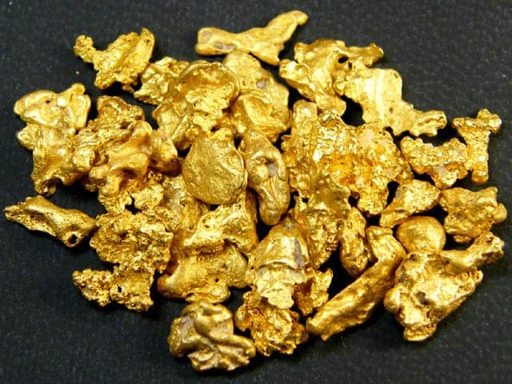
FAQs About Ghana Gold Coast: History, Gold Production,& Buying Gold in 2026
Discover answers to common FAQs about Ghana Gold Coast, including its history, gold trade, mining industry, economic importance, major gold-producing regions, and why Ghana remains one of Africa’s leading gold destinations in 2026.
The name “Gold Coast” did not arise from imagination or marketing. When Portuguese captains first reached the coast of modern Ghana in 1471 — the stretch of the Gulf of Guinea between the mouths of the Ankobra and Volta rivers — they encountered Akan peoples who had access to supplies of gold that were plentiful by contemporary European standards and who were willing and organised to trade it.
The Portuguese called this coast Mina, meaning “the mine,” and it became known throughout Europe as the Gold Coast — a name that defined the region for nearly five centuries, through Portuguese, Dutch, Danish, Swedish, and British colonial periods, until Ghana became the first sub-Saharan African country to achieve independence in 1957 and renamed itself after the ancient West African empire that had made gold famous to the wider world a millennium before Europeans arrived.
In 2026, the Gold Coast’s historical identity and its modern reality are perfectly aligned. Ghana is Africa’s largest gold producer, the world’s sixth largest, responsible for approximately 4.9 million ounces — 136 metric tonnes — of gold production in 2024, and gold export revenues of $11.6 billion in 2024, a 52.6 percent increase from 2023.
The Birimian greenstone belt and the Tarkwaian sedimentary sequences that underlie Ghana’s gold-bearing regions have been producing gold for over 1,000 years and continue to produce it in extraordinary volume under some of the most internationally respected mining companies operating in Africa.
This FAQ guide answers the most important questions about Ghana Gold Coast identity, its gold history, its current gold production landscape, and what buyers need to know about purchasing Ghana gold in 2026.
Below are the FAQs About Ghana Gold Coast;
-
Why Was Ghana Called the Gold Coast? What Is the Origin of the Name?
Ghana was called the Gold Coast because of the extraordinary abundance of gold found along its coastal and inland regions when Portuguese explorers arrived in 1471. The most momentous discovery in western Africa for European traders came when Portuguese captains reached the coast of modern Ghana between the mouths of the Ankobra and Volta rivers.
It was quickly appreciated that the Akan peoples of this coast had access to supplies of gold that were plentiful by contemporary European standards, and that they were willing and organised to trade some of this gold for base metals, cloth, and other manufactures.
The Portuguese initially called the coast “Mina” — meaning “the mine” — before the broader European terminology settled on “Gold Coast” as the established geographical reference. The name accurately reflected the physical reality: the Akan states of the interior — including the powerful Asante Empire that would later emerge — controlled access to the Birimian greenstone belt gold deposits that made this stretch of West Africa one of the most gold-rich regions on earth.
Arab merchants crossing the Sahara had known this for centuries before the Portuguese arrived; the Trans-Saharan trade routes had been carrying West African gold north across the desert since at least the eleventh century, enriching the empires of ancient Ghana, Mali, and Songhai in the process.
The Gold Coast name remained in official use through the establishment of the British Gold Coast Colony in 1874, through two successive gold rushes in the early twentieth century, and through the period of rising nationalism that culminated in independence.
When Kwame Nkrumah led the Gold Coast to independence on 6 March 1957 as the first sub-Saharan African country to throw off colonial rule, he chose the name Ghana — after the Ancient Kingdom of Ghana, the great medieval West African empire whose wealth had been built on the trans-Saharan gold trade — as a declaration of cultural continuity with pre-colonial African civilisation rather than with the colonial identity the Portuguese name represented.
-
When Did Gold Mining Begin on the Ghana Gold Coast?
Gold mining on the Ghana Gold Coast has a documented history of over 1,000 years, making it one of the world’s oldest continuously active gold-producing regions. For over 1,000 years, the Ancient Kingdom of Ghana, the former Gold Coast Colony, and present-day Ghana have produced a substantial portion of the world’s gold.
The gold derived from both the Tarkwaian and Birimian geological belts precipitated the development of many successful ancient West African civilisations, and later attracted merchants from both the Arab world and Western Europe.
Indigenous communities have been extracting gold since the 10th century in what is now Ghana. The earliest gold extraction was alluvial — surface panning and shallow pit mining of the gold-bearing gravels deposited by rivers running over the ancient Birimian greenstone formations.
This artisanal gold production supplied the trans-Saharan trade routes and, through the great West African empires, eventually reached North Africa, the Middle East, and mediaeval Europe.
The Asante Empire — which rose to regional dominance from the late seventeenth century — built its wealth and military power substantially on control of gold production and trade, and the Asante concept of gold as a sacred political substance (expressed in the Golden Stool of the Asante nation) reflects the deep cultural rootedness of gold in Ghanaian civilisation.
Commercial-scale gold mining on the Gold Coast began in 1897 near Obuasi in the Ashanti region, following the formal establishment of the British Gold Coast Colony in 1874.
The first gold mining companies were formed shortly after the British established the Gold Coast Colony, and following two successive gold rushes in the early 1900s, gold prospecting and extraction were widespread in Obuasi, Tarkwa, and Prestea — locations that remain among Ghana’s most productive mining areas today.
The Obuasi mine, operated by AngloGold Ashanti, is one of the deepest and most historically significant gold mines in Africa, with a production history extending back more than a century.
-
Which European Powers Competed for Control of the Gold Coast?
The Gold Coast’s extraordinary wealth attracted sustained and sometimes violent European competition across four centuries — a contest whose physical legacy still stands in the form of numerous coastal forts and castles that are now UNESCO World Heritage Sites and among Ghana’s most visited historical attractions.
The Portuguese were first, arriving in 1471 and establishing Elmina Castle in 1482 — the oldest European structure in sub-Saharan Africa, built to serve as a trading post for gold.
The arrival of the Portuguese at Elmina triggered a surge in European demand for African gold that lasted until the nineteenth century.
For roughly the first century after their arrival, the Portuguese maintained a near-monopoly on European Gold Coast trade, profiting enormously from their role as intermediaries between the Akan gold producers of the interior and European markets.
In the seventeenth century, the Portuguese monopoly was broken by Protestant sea powers whose antagonism to Iberian imperial claims made the Gold Coast a contested prize.
Dutch, British, Danish, Swedish, and Prussian traders all established competing commercial operations. By the mid-eighteenth century the coastal scene was dominated by the presence of about 40 forts controlled by Dutch, British, or Danish merchants — a physical concentration of European commercial infrastructure that has no parallel elsewhere in sub-Saharan Africa.
These forts were built to store and protect gold awaiting shipment, to project military power, and later to hold enslaved people as the trade shifted from gold to human cargo.
The British ultimately prevailed over their European competitors and established the Gold Coast Colony in 1874 — a formal colonial administration that brought the region under British Crown governance until independence in 1957.
The British period saw the formalisation of large-scale gold mining infrastructure, the construction of the railway that connected the inland mining regions to the coast, and the beginning of the industrial gold mining era that modern Ghana has inherited.
-
Where Are Ghana’s Major Gold Deposits Located?
Ghana’s gold resources are geographically concentrated in several key regions, each hosting significant mining operations that have become centres of economic activity, infrastructure development, and employment.
These areas remain hubs of activity in 2026, and understanding their distribution illuminates both the geological richness of the Gold Coast’s historical name and the structural character of modern Ghanaian gold production.
The Birimian greenstone belt is the geological formation that contains most of Ghana’s gold — an ancient volcanic and sedimentary rock sequence that runs in a broad arc across the country from the northwest to the southwest. This belt hosts the majority of Ghana’s large-scale hard-rock gold mines and has a gold-bearing character that makes it one of the most prolific gold-producing geological systems in the world.
The Birimian belt’s gold was accessible to ancient artisanal miners through alluvial deposits in river systems and is now accessed by industrial mining through underground and open-pit operations of increasing depth and scale.
The Ashanti Region — centred on Obuasi and Kumasi — is the heartland of Ghanaian gold production and the region most directly associated with the Gold Coast’s historical wealth.
The Obuasi Mine, operated by AngloGold Ashanti, has been producing gold continuously since 1897 and remains one of Africa’s most significant hard-rock gold operations.
The Ashanti Region also hosts substantial artisanal and small-scale mining activity across numerous smaller deposits outside the boundaries of the major industrial operations.
The Western Region — including Tarkwa and Bogoso — hosts the Tarkwa Mine, which Ghana also has the largest open-pit gold mine in Africa by size, the 200 square-kilometre Tarkwa mine operated by Gold Fields.
The Tarkwaian sedimentary belt that runs through this region represents a geologically distinct gold-bearing system from the Birimian and has been a major production zone since the early twentieth century gold rushes.
The Brong-Ahafo Region — home to Newmont’s Ahafo Mine — is one of Ghana’s most productive modern mining areas. Newmont’s North Ahafo mine development is among the major new gold projects coming online in 2026, expanding the company’s already substantial presence in this region.
The Upper West Region and northwestern Ghana — historically less developed for mining — is emerging as a new frontier. A new gold mine by Azumah Resources in northwestern Ghana, near the border with Burkina Faso, is slated to start production in 2026, and promising exploration efforts in Kpali near Wa may lead to new mining settlements and projects in that region.
-
How Much Gold Does Ghana Produce Today? Current Production Statistics for 2026
Ghana is Africa’s largest gold producer and one of the top ten gold producers in the world in 2026. In 2024, Ghana mined an estimated 4.9 million ounces — approximately 136 metric tonnes — of gold, representing an 8.5 percent increase compared to 2023.
This production figure reflects contributions from both large-scale industrial mining operations run by multinationals and the growing contribution of artisanal and small-scale mining, which played a crucial role, contributing $5 billion in export revenue and employing over one million people.
Ghana’s gold exports reached $11.6 billion in 2024, a 52.6 percent increase from $7.6 billion in 2023 — a growth rate driven by both the record-high gold price environment and the increased production volume.
In the first four months of 2025, Ghana earned $5.2 billion from gold exports, a 76.4 percent increase year-on-year — continuing the extraordinary revenue trajectory that has made gold the primary source of foreign exchange inflows for Ghana. Gold accounts for over 37 percent of Ghana’s total export earnings, making it the single most important commodity in the national economy by value.
The major industrial gold producers operating in Ghana in 2026 include AngloGold Ashanti at Obuasi, Gold Fields at Tarkwa and Damang, Newmont at Ahafo and Akyem, Kinross at Chirano, and the Cardinal Namdini mine operated by Cardinal Resources, a unit of Shandong Gold.
New greenfield projects coming online in 2026 — including Newmont’s North Ahafo and Azumah Resources’ northwest Ghana operation — are expected to sustain and expand Ghana’s production growth trajectory.
-
What Is the Historical Significance of Elmina Castle in Ghana’s Gold Coast History?
Elmina Castle — whose name derives from the Portuguese “A Mina” meaning “the mine” — is the physical monument at which Ghana’s Gold Coast history and its gold trade history most tangibly converge.
Established in 1482 on the coast of present-day Ghana’s Central Region, Elmina Castle was the first permanent European structure built in sub-Saharan Africa, constructed by the Portuguese to serve as a trading post and secure storage facility for the gold they were acquiring from the Akan states of the interior.
The establishment of Elmina Castle had immediate and transformative consequences for the Gold Coast. The Portuguese not only tapped into the lucrative Atlantic gold trade but also set the stage for a series of complex interactions between European traders and African states that would reshape the entire region’s political and economic landscape over the following centuries.
The castle’s construction signal-posted to other European powers that the Gold Coast was an extraordinarily valuable commercial prize — triggering the multi-century competition for control that brought Dutch, British, Danish, and other European merchants to build their own fortified trading posts along the coast.
Elmina Castle is today a UNESCO World Heritage Site, recognised alongside Cape Coast Castle and numerous other coastal forts as part of the “Forts and Castles of Ghana” World Heritage designation.
For travellers visiting Ghana’s Gold Coast in 2026, these historical sites offer direct physical contact with the gold trade history that named the country and shaped its modern economy — making a visit to Elmina and Cape Coast an essential complement to any understanding of Ghanaian gold’s extraordinary historical significance.

-
What Is the Birimian Greenstone Belt and Why Does It Matter for Gold?
The Birimian greenstone belt is the geological formation that has made Ghana one of the world’s great gold-producing regions for over a millennium. Understanding it is fundamental to understanding why the Gold Coast earned its name — and why Ghana continues to produce extraordinary volumes of gold in 2026.
Greenstone belts are ancient sequences of volcanic and sedimentary rocks — typically Proterozoic in age, meaning they formed between 1.6 and 2.5 billion years ago — that form highly favourable geological environments for gold mineralisation.
The gold deposits in greenstone belts form when hot, gold-bearing hydrothermal fluids migrate through rock fractures and deposit gold in zones of structural complexity — creating the concentrated ore bodies that both ancient artisanal miners and modern industrial operations target.
The Birimian greenstone belt runs across southwestern and central Ghana and is the host rock for the majority of Ghana’s major gold deposits.
The Tarkwaian sedimentary belt — a younger, overlying sequence of conglomerate and sandstone — represents a second distinct gold-hosting geological system in Ghana, formed by the erosion and redeposition of Birimian gold-bearing material.
The Tarkwa Mine’s gold is hosted in Tarkwaian conglomerates in a manner geologically analogous to the Witwatersrand deposits of South Africa — the world’s richest gold-bearing geological system — making the comparison a scientifically meaningful one rather than simply a marketing claim.
Both the Birimian and Tarkwaian belts have been producing gold — first alluvially by artisanal miners, then industrially by mining companies — for over a thousand years without exhaustion.
The geological scale of these systems, and the depth to which gold mineralisation continues below the current workings of active mines, suggests that Ghana’s gold production potential for future centuries remains substantial.
-
How Does the Historical Gold Coast Relate to Modern Ghana’s Gold Economy?
The relationship between the historical Gold Coast and modern Ghana’s gold economy is one of the most direct and most substantive continuities in African economic history.
The gold that named the coast, attracted the Portuguese, sparked five centuries of European competition, provided the material basis for the Asante Empire’s military and cultural power, funded colonial infrastructure, and sustained post-independence economic growth is the same gold — from the same Birimian and Tarkwaian geological systems, processed through the same alluvial river deposits — that made Ghana’s export revenues $11.6 billion in 2024 and that continues to attract the world’s largest mining companies to the country in 2026.
The continuity is cultural as well as economic. The Akan concept of gold as sacred — expressed in the Asante Golden Stool, in the adinkra symbols of Ghanaian textile tradition, in the elaborate goldwork of the Asante court — reflects a relationship between the Ghanaian people and gold that predates the Portuguese arrival by many centuries and persists as a living cultural reality alongside the modern mining economy.
When Ghana chose its post-colonial name, it did so by invoking the Ancient Kingdom of Ghana — the great Sahelian empire whose trans-Saharan gold trade made West African gold famous to the medieval world — as its historical progenitor. Gold and Ghanaian identity are inseparable at the deepest level.
The economic importance of gold to modern Ghana is equally unambiguous. Gold accounts for over 37 percent of total export earnings and is the single most important source of foreign exchange.
The 2025 establishment of the Ghana Gold Board (GoldBod) — which centralised control over all artisanal and small-scale gold buying, selling, and exporting — is the most recent expression of the Ghanaian government’s determination to ensure that the country’s gold wealth generates maximum national benefit rather than leaking through informal channels.
In 2025 alone, GoldBod mobilised over $10 billion in gold exports from the ASM sector — revenues that previously escaped the formal economy entirely.
-
What Is the Role of Artisanal Gold Mining on the Ghana Gold Coast Today?
Artisanal and small-scale gold mining — known in Ghana as “galamsey” in its illegal form and as legitimate ASM in its licensed form — is one of the most socially, economically, and environmentally complex dimensions of the Ghanaian gold economy.
The ASM sector employs directly over one million Ghanaians and supports 4.5 million people indirectly, making it one of the largest single employment sectors in the country outside agriculture.
In 2024, the ASM sector contributed $5 billion in export revenue — roughly one-third of Ghana’s total gold export value — making it not only a livelihood sector but a major macroeconomic contributor.
The artisanal mining tradition on the Gold Coast predates European arrival by centuries. The same alluvial gold deposits in the rivers of the Birimian and Tarkwaian belts that supplied ancient trans-Saharan trade routes and later attracted European merchants are still worked by small-scale miners using techniques ranging from traditional panning to more mechanised pit and sluice operations.
This continuity with ancient practice sits alongside the contemporary environmental challenges that large-scale illegal galamsey creates — mercury contamination of river systems, forest clearance, and land degradation that have prompted successive Ghanaian governments to attempt enforcement crackdowns with mixed results.
The GoldBod regulatory framework — established in 2025 under the Ghana Gold Board Act — is the government’s most ambitious attempt yet to channel ASM gold production through formal, documented, traceable pathways that generate government revenue, prevent environmental degradation, and ensure that ASM miners receive fair prices in a competitive, monitored market.
For international buyers, GoldBod-sourced ASM gold from Ghana represents a supply chain that is more traceable and more formally documented than at any point in the Gold Coast’s history.
-
What Should Buyers Know About Purchasing Gold Labelled “Ghana Gold Coast” in 2026?
The term “Ghana Gold Coast gold” — used by sellers to evoke the region’s extraordinary historical gold reputation — describes gold originating from Ghana’s established producing regions.
Understanding what this means in practice for buyers in 2026 requires distinguishing between the historical and marketing dimensions of the “Gold Coast” identity and the regulatory and documentation reality of modern Ghanaian gold purchasing.
All gold exported from Ghana in 2026 must comply with the Ghana Gold Board Act (Act 1140, 2025), which established the Ghana Gold Board (GoldBod) as the sole buyer, seller, assayer, and exporter of all artisanal and small-scale mining gold in Ghana.
For ASM-origin gold — the most widely marketed “Ghana Gold Coast” product — buyers must purchase through GoldBod’s official channels or through a GoldBod-licensed Ghanaian aggregator.
Foreign companies cannot hold domestic gold purchasing licences under Act 1140; they may only purchase through direct off-taker arrangements with GoldBod or through joint ventures with Ghanaian-licensed entities.
For large-scale industrial gold from Ghana — the doré and refined bars produced by AngloGold Ashanti, Gold Fields, Newmont, and Kinross — the existing mining company licence structures remain valid under GoldBod’s transitional provisions.
Industrial gold from these operations carries the full documentation package of LBMA-credentialed refineries and meets every standard required by institutional buyers worldwide.
Buyers should be aware that the “Gold Coast” branding is sometimes used by fraudulent operators to attach historical prestige to non-existent or non-compliant transactions.
The same due diligence principles that apply to any African gold purchase apply here: verify the seller’s GoldBod licence or mining company licence directly with the Ghana Minerals Commission or GoldBod’s Licensing and Regulations Office, insist on GGDO-certified assay documentation for every consignment, and structure payment through SWIFT wire transfer to a verified Ghanaian corporate bank account.
The Gold Coast’s gold is real, its regulatory framework is established, and its historical reputation is earned across over a millennium of production.
Accessing it correctly is a matter of engaging the framework that has been built to support legitimate international buyers — and avoiding the informal channels that the GoldBod Act was specifically designed to close.