FAQs About Buying Gold in Congo

FAQs About Buying Gold in Congo

FAQs About Buying Gold in Congo: The Complete DRC Gold Buying Guide for 2026

Find answers to the most common FAQs about buying gold in Congo (DRC). Learn about gold prices, export permits, legal requirements, documentation, trusted suppliers, payment methods, and essential tips for safely purchasing gold from the Democratic Republic of the Congo in 2026.

The Democratic Republic of Congo is one of the world’s most mineral-rich countries and one of its most paradoxical. Sitting atop an estimated $24 trillion in untapped natural resources — gold, cobalt, coltan, diamonds, copper, and more — the DRC produces extraordinary quantities of precious metals that reach international markets through both legal and illegal channels.

Its gold sector is simultaneously one of the most compelling sourcing opportunities for serious international buyers and one of the most compliance-intensive supply chains in the African gold market.

Buying gold in the DRC in 2026 is entirely possible for international buyers who understand the regulatory framework, engage the right licensed partners, apply OECD Due Diligence standards, and structure transactions through documented, traceable channels.

This FAQ guide answers every significant question about purchasing Congo gold — from the regulatory agencies involved to current prices, documentation requirements, conflict mineral compliance, and how to protect yourself from the fraud that has historically plagued informal DRC gold channels.

Below are the FAQs About Buying Gold in Congo;

  1. Who Regulates Gold Buying and Exporting in the DRC?

The DRC’s gold sector is governed by a multi-agency regulatory framework whose complexity reflects both the country’s mineral wealth and the governance challenges that have historically made the sector difficult to oversee consistently. Understanding which agency has jurisdiction over which dimension of a gold transaction is essential before engaging any DRC gold supplier.

The Cadastre Minier (CAMI) is the DRC Mining Register that issues and manages all mining permits and trading licences. Large-scale exploration permits (permis de recherches, PR) and exploitation permits (permis d’exploitation, PE) are officially granted by CAMI.

Every entity involved in commercial gold purchasing or exporting in the DRC must hold a CAMI-registered trading licence (comptoir licence) as the foundational legal authorisation. Verifying a supplier’s CAMI registration is the first due diligence step for any international buyer.

The Centre d’Expertise, d’Evaluation et de Certification (CEEC) is the Ministry of Mines’ standards and certification organisation specifically charged with the certification of gold and diamonds.

The CEEC is the DRC’s most operationally important single agency for gold buyers — it issues the assay certificates that confirm gold purity and weight, the certificates of origin that establish the gold’s Congolese provenance, and the ICGLR (International Conference on the Great Lakes Region) conflict-free traceability tags that are required by EU and US compliance frameworks.

To control the export of non-ferrous minerals, the CEEC issues the Certificate of Origin. Exporters must declare the origin and sale of mining products two days before export.

ARECOMS (Autorité de Régulation et de Contrôle des Mines Stratégiques) is the regulatory authority specifically established to oversee the DRC’s strategic minerals — including gold, coltan, and cassiterite — with a particular mandate around responsible sourcing and OECD compliance.

ARECOMS enforces the due diligence framework that DRC gold exporters must apply to their supply chains, including the traceability requirements that are essential for meeting international buyer compliance obligations.

The Ministry of Mines exercises overall policy authority and oversight of the entire mining sector, including gold. The Ministry’s Direction des Mines and regional mining divisions oversee field-level compliance monitoring, provide the government validation that accompanies CEEC certificates, and manage the artisanal mining formalisation programmes that are a key feature of the DRC’s 2025-2026 mining policy agenda.

DRC Gold Trading SA is the state commercial entity established to purchase artisanal gold, certify its traceability, and channel exports through legal markets.

In 2025 alone, DRC Gold Trading mobilised over $10 billion in gold-related activity and is targeting channelling 15 tonnes of artisanal gold through official trade in 2026.

For international buyers who want access to government-certified DRC artisanal gold with full traceability documentation, DRC Gold Trading is increasingly an important counterparty.

FAQs About Buying Gold in Congo

  1. Can Foreigners Buy Gold in the DRC?

Yes — foreigners can legally buy gold in the DRC, but the process requires working within the formal regulatory framework that the 2018 Mining Code and subsequent regulations have established. There is no blanket prohibition on foreign gold purchasing in the DRC in the manner of Ghana’s GoldBod Act, which restricts domestic purchasing licences to Ghanaian nationals.

In the DRC, buyers need permits from the Ministry of Mines to ensure compliance with local regulations, and foreign buyers typically structure their purchasing through CAMI-licensed local entities — called comptoirs — that hold the formal gold dealer and export licences.

A comptoir is a licensed gold buying and aggregation office that purchases from artisanal miners and small producers, presents the gold to the CEEC for assaying and certification, and manages the export process under its own Ministry of Mines authorisation.

Foreign buyers who do not hold their own DRC mining or trading licence — which requires substantial operational presence in the country — access DRC gold by establishing commercial relationships with licenced comptoirs and purchasing the certified gold they aggregate and export.

Foreign companies that wish to establish their own direct purchasing operations in the DRC must register with CAMI, hold a comptoir licence from the Ministry of Mines, and comply with the full operational requirements of the 2018 Mining Code — including the OECD Due Diligence framework, ARECOMS compliance, and EITI-mandated reporting on quantities and values.

The 26-step formal process for gold export documented by organisations including IMPACT (formerly Partnership Africa Canada) illustrates the complexity of full self-managed DRC gold operations; most international buyers find that working through established, vetted local comptoirs is the more practical and more immediately achievable route to market.


  1. What Is the Current Gold Price in Congo in 2026?

Gold prices in the DRC track the international LBMA spot price, converted into Congolese Francs (CDF) at the prevailing exchange rate, with adjustments reflecting the local market dynamics of purity, documentation quality, and source region. As of June 2026, the LBMA gold spot price is approximately $4,457 per troy ounce ($143.30 per gram for 24K refined gold).

DRC artisanal gold — the primary product available for purchase through the comptoir network — trades at a discount to the refined 24K LBMA spot, reflecting the cost of refining the raw material to investment-grade specification and the risk premium associated with documentation quality.

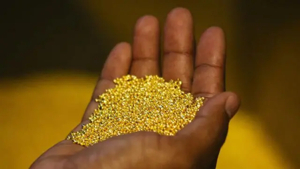
As of 2026, raw artisanal gold dust from the DRC trades in the range of approximately $115 to $138 per gram depending on the assayed purity (typically 88 to 97 percent for artisanal material) and the quality and completeness of the CEEC certification.

Higher-purity, better-documented material from Maniema Province or certified cooperative sources commands premiums within this range; lower-purity or less-documented North Kivu material may trade at greater discounts.

Gold nuggets from the DRC — which carry purity levels of 90 to 98 percent depending on source geology — are certified by CEEC for purity and valuation and trade at purity-adjusted discounts to 24K gold spot.

The USD/CDF exchange rate as of 2026 is approximately 2,820 CDF per USD, making a gram of artisanal gold worth approximately 324,000 to 390,000 CDF at current prices.

Industrial-grade doré from the Kibali Gold Mine in Haut-Uélé Province — which produced 673,000 troy ounces in 2025 — enters international markets at LBMA-adjacent pricing through Barrick Gold and AngloGold Ashanti’s institutional export channels.


  1. Where Does Congo Gold Come From? The Major Gold-Producing Regions

The DRC’s gold deposits are concentrated in the country’s eastern and northeastern provinces — a geological richness that overlaps significantly with the region’s complex conflict history, making responsible sourcing documentation both critically important and practically challenging for buyers who want to access this supply.

Ituri Province in the northeastern DRC is one of the continent’s most prolific artisanal gold production zones, centred on the town of Bunia and extending across the Ituri goldfields including the Mongbwalu and Bule mining areas.

Gold from Ituri is typically high-quality alluvial material assaying at 92 to 97 percent purity. Bunia is a primary trading hub where licensed buying agents aggregate from hundreds of small mine sites and channel material toward formal export. Ituri is also one of the pilot provinces for the DRC’s 2026 artisanal formalisation programme.

South Kivu Province produces some of the DRC’s finest natural gold, particularly from the Kamituga and Luhwindja mining communities. South Kivu gold regularly assays at 91 to 95 percent purity and is exported in significant volumes to Indian refineries that have established direct relationships with South Kivu cooperatives.

The province has a more developed cooperative structure than North Kivu, with a higher proportion of miners operating under registered cooperatives that provide institutional frameworks for traceability.

North Kivu Province hosts significant gold deposits in areas including Walikale, Masisi, and Rutshuru. North Kivu presents the most complex responsible sourcing environment in the DRC due to the documented presence of armed groups in parts of the gold-bearing territory.

International attention intensified following sanctions against specific gold refining networks for allegedly processing illicit Congolese gold from this region. Buyers sourcing North Kivu gold require the most rigorous OECD Due Diligence compliance and third-party supply chain audits.

Maniema Province represents the most attractive lower-risk artisanal gold sourcing region in the DRC for compliance-conscious buyers.

Located away from the primary conflict zones of the eastern DRC, Maniema’s gold deposits around Namoya, Punia, and Kasongo attract buyers who prioritise responsible sourcing documentation without the highest-tier security risk profile.

Haut-Uélé Province is home to the Kibali Gold Mine — Africa’s most significant single gold operation, producing 673,000 troy ounces in 2025 with revenues of $2.31 billion.

Kibali gold enters international markets through Barrick and AngloGold Ashanti’s institutional channels with full LBMA compliance documentation.


  1. What Types of Gold Are Available for Purchase in the DRC?

Artisanal gold dust is the most widely available form of DRC gold for purchase through the comptoir network. Sourced from alluvial river deposits and shallow hard-rock workings across Ituri, South Kivu, Maniema, and North Kivu, artisanal dust assays at 88 to 97 percent purity and is certified by CEEC for both purity and conflict-free status before export. This material is ideal for buyers with refinery relationships who can process it to investment-grade specification.

Gold nuggets from the DRC carry purity levels of 90 to 98 percent and are certified by CEEC for purity (90–98%) and valuation, plus ICGLR traceability tags for conflict-free status.

Nuggets from the Ituri alluvial fields and South Kivu’s geological gold formations are among the most sought-after natural gold forms in the African market due to their high purity and the aesthetic appeal they carry in collector and jewellery markets alongside their investment value.

Gold doré bars from DRC industrial mining operations represent the highest-quality, most institutionally traceable form of DRC gold. Kibali Mine doré — refined to 97 to 99.9 percent gold content at the mine’s on-site smelter — is exported directly through Barrick and AngloGold Ashanti’s established logistics channels.

Access to Kibali-channel doré for independent buyers is limited; this supply stream flows primarily through the joint venture partners’ own institutional sales networks.

Refined 24K investment bars from DRC gold that has been processed through Uganda’s African Gold Refinery or other regional facilities are available through licensed exporters who have refinery processing relationships. These bars carry full assay documentation and LBMA-adjacent quality standards.

  1. What Is the CEEC and Why Is Its Certification Essential?

The Centre d’Expertise, d’Evaluation et de Certification — universally known as the CEEC — is the single most important certification body for any international buyer of DRC gold.

Established under the Ministry of Mines and operating from its headquarters in Kinshasa with field offices in the major mining provinces, the CEEC is a trusted authority in the Democratic Republic of Congo, dedicated to safeguarding the integrity and value of the nation’s mineral resources.

The CEEC performs three essential functions for every gold export consignment. First, it assays the gold — confirming its weight and purity through independent laboratory testing. Second, it issues the Certificate of Origin — the document that establishes the gold’s Congolese provenance and legal sourcing status.

Exporters must declare the origin and sale of mining products two days before export, and the declaration is verified and signed by the Directorate of Mines. Third, the CEEC coordinates with the ICGLR’s Regional Certification Mechanism to issue the conflict-free traceability tags (ICGLR certificates) that international buyers subject to Dodd-Frank, EU Conflict Minerals Regulation, and LBMA Responsible Sourcing requirements need to demonstrate that their gold did not fund armed groups.

No DRC gold export is legal without CEEC certification. Any gold presented for sale without a current, verifiable CEEC certificate number is either from a non-compliant or illegal source — and importing it into the United States, EU, or other regulated markets creates legal exposure for the buyer regardless of their stated good-faith intention. Always verify CEEC certificate serial numbers directly with the Centre’s Kinshasa office before releasing any payment for DRC gold.

  1. What Does OECD Compliance Mean for DRC Gold Buyers?

The OECD Due Diligence Guidance for Responsible Supply Chains of Minerals from Conflict-Affected and High-Risk Areas is the international framework that governs how companies should manage the risk of sourcing minerals — including gold — from regions where armed groups, human rights abuses, or governance failures may be present in or near the supply chain.

The DRC is the primary country for which this guidance was developed, reflecting the well-documented history of armed group involvement in eastern DRC mineral trade.

For buyers of DRC gold, OECD compliance requires conducting a five-step due diligence process. Step One is establishing strong company management systems — a written supply chain policy for DRC minerals, internal audit and grievance mechanisms, and a supplier management system that assesses risk at each supply chain node.

Step Two is identifying and assessing risk — mapping the supply chain from the mine of origin to the point of export, identifying all entities in the chain, and assessing each against the OECD’s risk indicators for armed group involvement, serious human rights abuses, and corrupt government actors.

Step Three is designing and implementing a strategy to respond to identified risks — including engaging with suppliers to remediate identified risks, suspending or terminating relationships with suppliers whose risks cannot be mitigated, and reporting risk findings to appropriate authorities.

Step Four is carrying out independent third-party audits of supply chain due diligence — either directly or through participation in industry audit programmes such as iTSCi or IPIS. Step Five is reporting annually on supply chain due diligence — disclosing findings publicly in the format required by applicable law.

For US buyers, Section 1502 of the Dodd-Frank Wall Street Reform and Consumer Protection Act requires SEC-registered companies that use DRC-sourced “conflict minerals” — including gold — in their products to file annual Conflict Minerals Reports disclosing their supply chain due diligence.

This requirement makes OECD compliance documentation not merely good practice but a legal reporting obligation for publicly traded companies sourcing DRC gold. CEEC certification and ICGLR conflict-free tagging are the documentary evidence of compliance that these reports rely on.

14k gold

  1. How Much Gold Does Congo Produce and What Are the Main Challenges?

The DRC’s gold production figures present a striking contrast between formal declared production and estimated actual extraction — a gap that is itself one of the most important facts for any buyer to understand about the DRC gold market.

Formally declared gold production in the DRC is dominated by the Kibali Gold Mine, which produced approximately 673,000 troy ounces in 2025 — accounting for nearly all of the country’s reported industrial gold output.

The artisanal sector’s formal contribution to declared production figures is a fraction of its actual output, because an estimated 40 to 60 tonnes of DRC gold — valued at $3 billion to $7 billion annually at 2026 prices — is smuggled out of the country each year through Uganda, Rwanda, Burundi, and the UAE, evading approximately $300 to $600 million in annual government revenues and appearing in international markets as Ugandan, Rwandan, or UAE-origin gold rather than Congolese.

The DRC Gold Trading SA company — established to formalise ASM gold purchasing — is targeting channelling 15 tonnes of artisanal gold through official trade in 2026, with 45 international buyers already registered to access supply. The March 2026 launch of the DRC’s first domestic gold refinery in Kalemie, Tanganyika Province, represents a landmark step toward retaining gold value-addition within the country.

These formalisation initiatives are material for buyers because they represent a growing, documented supply of CEEC-certified, traceable DRC artisanal gold that meets international compliance requirements.

The primary challenges for DRC gold buyers in 2026 remain the security environment in North Kivu (where M23 rebel activity continues to affect parts of the gold-bearing territory), the capacity constraints of CEEC and ARECOMS to scale their certification operations to match growing formalisation ambitions, and the fundamental economics of the informal trade which continue to make smuggling financially attractive despite regulatory enforcement.


  1. What Documentation Is Required to Buy and Export Gold from the DRC?

The DRC gold export documentation package is one of the most extensive in the African gold market, reflecting both the complexity of the regulatory framework and the responsible sourcing obligations imposed by international compliance requirements.

  • CAMI trading licence — confirming the exporter’s registration with the DRC Mining Register as a licensed gold comptoir
  • CEEC assay certificate — confirming gold purity (percentage fineness) and weight in grams for the specific consignment
  • CEEC Certificate of Origin — establishing the gold’s Congolese provenance, signed by the Directorate of Mines
  • ICGLR conflict-free certificate — issued through the ICGLR Regional Certification Mechanism confirming the gold did not fund armed groups
  • ARECOMS OECD compliance documentation — supply chain due diligence records meeting the five-step OECD framework
  • Export permit from the Ministry of Mines — authorising the specific consignment’s departure from the DRC
  • Customs export declaration — filed with the Direction Générale des Douanes et Accises (DGDA)
  • Commercial invoice — declaring the weight, purity, USD value, and buyer and seller details
  • Proof of royalty payment — confirming the 3.5% export royalty on assessed value has been paid under the 2018 Mining Code
  • Packing list — detailing the contents of the shipment for customs and security verification

This documentation requirement extends further for buyers in regulated markets. EU buyers subject to the EU Conflict Minerals Regulation must additionally document their own supply chain due diligence in the format required by EU Regulation 2017/821. US buyers subject to Dodd-Frank Section 1502 must maintain records sufficient to support an annual Conflict Minerals Report filed with the SEC.


  1. How Do I Protect Myself When Buying Gold from Congo? Fraud Risks and Safety Measures

The DRC gold market has historically attracted a significant volume of fraud attempts targeting international buyers — a reality acknowledged by every credible source on this market, from OECD guidance documents to US State Department advisories. The fraud risk is real, specific, and manageable through a defined set of protective measures that every serious buyer must apply.

Verify CAMI comptoir registration directly. Any DRC entity representing itself as a licensed gold exporter must hold a current CAMI trading licence. Contact CAMI’s Kinshasa offices directly — through the official cadastre minier registration system — to confirm that the licence number presented by your supplier is current, valid, and registered to the entity name you are dealing with. Never accept licence documentation at face value without independent verification.

Require CEEC certification with verifiable serial numbers. Every legitimate DRC gold transaction produces a CEEC assay certificate and Certificate of Origin with serial numbers that can be cross-checked with the CEEC’s Kinshasa office. Verify serial numbers directly before any payment is released. A certificate that cannot be confirmed by the CEEC is a fraudulent document, regardless of how convincing it appears.

Require ICGLR conflict-free certificates for all eastern DRC supply. For gold from Ituri, South Kivu, Maniema, or North Kivu, the ICGLR certificate is not optional — it is the documented evidence that the gold did not pass through armed group control. This certificate is verifiable through the ICGLR’s Regional Secretariat.

Any supplier of eastern DRC gold who cannot produce ICGLR-certified supply is offering either undocumented or non-compliant material.

Pay only through SWIFT wire transfer to a verified corporate account. All legitimate DRC gold payments are structured as bank-to-bank SWIFT transfers to the corporate account of the licensed comptoir entity.

Any request for cash, cryptocurrency, Western Union, money transfer services, or payment to a personal account is an immediate disqualifying red flag.

Use independent escrow for first transactions. For any new DRC gold counterparty relationship, structure your payment through independent financial escrow. Release payment only on confirmed CEEC certificate verification and post-receipt independent assay at your destination.

This structure protects you entirely from advance-fee fraud and phantom gold fraud — the two most common categories of DRC gold scam targeting international buyers.

Engage a DRC-experienced legal adviser. For transactions above $50,000, retain legal counsel with specific DRC mining law expertise who can verify CAMI and CEEC documentation directly, review the sales contract under Congolese law, and provide professional oversight of the transaction structure from commercial agreement through to export clearance.

The DRC gold market in 2026 — accessed through CAMI-licensed comptoirs, with CEEC-certified and ICGLR conflict-free documentation, through verified banking payment channels, and with OECD-compliant supply chain records — offers international buyers access to some of the finest and most value-efficient gold available in Africa.

The compliance burden is real and demanding. But it is precisely that burden which protects the legitimate supply chain from the fraud and illicit activity that have historically plagued the informal channels — and which gives compliant buyers confidence that what they receive is what they paid for.

Leave a Reply

Your email address will not be published. Required fields are marked *