Is Gold a Good Investment in 2026? Everything You Need to Know
Is Gold a Good Investment in 2026: Gold hit an all-time high of $5,602 per troy ounce on January 28, 2026. If you missed that headline and are only now asking is gold a good investment in 2026, you are not alone — and you are not too late.
Whether you are a first-time investor looking for a safe haven in uncertain times or a seasoned portfolio manager reassessing your precious metals allocation, this guide gives you everything you need to make a confident, informed decision about buying gold this year.
Why the Gold Price Is Surging in 2026
Understanding why gold is performing the way it is in 2026 starts with understanding what gold actually does: it moves inversely to confidence. When investors lose faith in currencies, governments, or equity markets, they rotate into gold. Right now, several forces are driving that rotation simultaneously.
The US dollar has faced sustained depreciation pressure from persistent federal deficit spending and the unwinding of pandemic-era monetary stimulus. At the same time, central banks — particularly in China, India, Russia, and across the Middle East — have been buying gold at record rates, pulling physical supply off the market while demand continues to climb.
Geopolitical instability across Eastern Europe, the Middle East, and parts of Africa has made gold’s status as a crisis hedge more relevant than it has been in decades.
Add to this J.P. Morgan’s forecast of $6,300 per ounce by end of 2026 and Goldman Sachs projecting $4,000 by year-end, and you have a rare consensus among institutional analysts that gold’s bull run has genuine structural legs beneath it.
For investors who want direct exposure to physical gold at Africa-direct prices, Gold Bars For Sale Africa provides certified 24K and 22K gold bars sourced from licensed mines in Uganda, Ghana, Congo, Mali, Kenya, and Tanzania — at premiums of just 1–3% above the live LBMA spot rate.
Is Gold a Better Investment Than Stocks in 2026?
This is one of the most Googled investment questions of the year, and the honest answer is: it depends on what you need your investment to do. Gold is not a growth asset in the way equities are. It does not pay dividends.
It does not compound. What it does — with remarkable consistency over centuries — is preserve purchasing power and provide portfolio insurance against the kind of systemic shocks that can erase equity gains in days.
In 2026, gold is up more than 40% year-on-year. The S&P 500, by contrast, has delivered single-digit returns against a backdrop of rate volatility and earnings compression.
For investors with a 3–10 year horizon who are overweighted in equities and underweighted in hard assets, rotating 10–20% of a portfolio into physical gold or gold bullion from Africa is a move that financial planners are actively recommending right now.
Gold also provides something equities categorically cannot: decorrelation. In the 2008 financial crisis, gold rose while virtually every other asset class fell. During the COVID-19 crash of March 2020, gold dipped briefly then surged to all-time highs within months.
This counter-cyclical behavior is precisely what makes gold a good investment in 2026 as a portfolio stabiliser — not necessarily as a speculative bet.
Physical Gold vs. Paper Gold: Which Is the Better Investment?
When people ask whether gold is a good investment, they often conflate two very different things: physical gold ownership and paper gold exposure. The distinction matters enormously.
Paper gold — ETFs like GLD, futures contracts, and CFDs — gives you price exposure without ownership. These instruments are convenient, liquid, and cheap to trade, but they come with counterparty risk. If the institution backing your ETF faces liquidity problems, your “gold” may not protect you when you need it most. ETFs also charge management fees that erode returns silently over time.
Physical gold — bars, coins, nuggets, and bullion — you own outright. No counterparty. No management fee. No bank standing between you and your asset. Physical gold is the form central banks hold.
It is what families in India, the Middle East, and sub-Saharan Africa have used for generational wealth preservation for centuries. When you buy 24K gold bars from Africa with an assay certificate and insured delivery, you are holding the same class of asset that central banks stack in vaults — just sized for individual investors.
The trade-off is storage and insurance, which for most investors amounts to a small annual cost easily outweighed by the security of unencumbered ownership.
To understand how to verify what you are buying, read the site’s guide on gold assay and certification before making any purchase.
What Karat of Gold Should You Buy in 2026?
One of the most practical questions for new gold investors is which purity level to buy. The answer depends on your purpose.
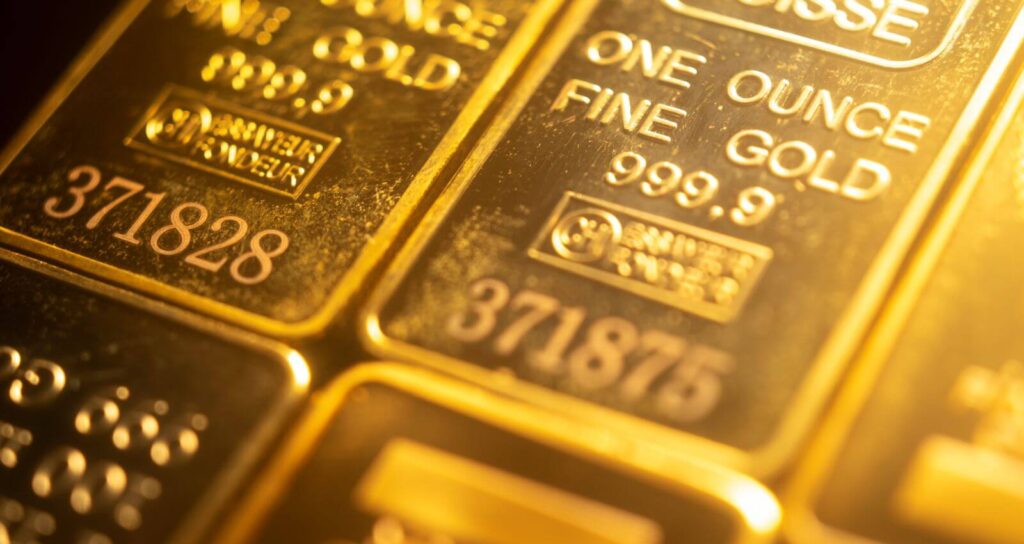
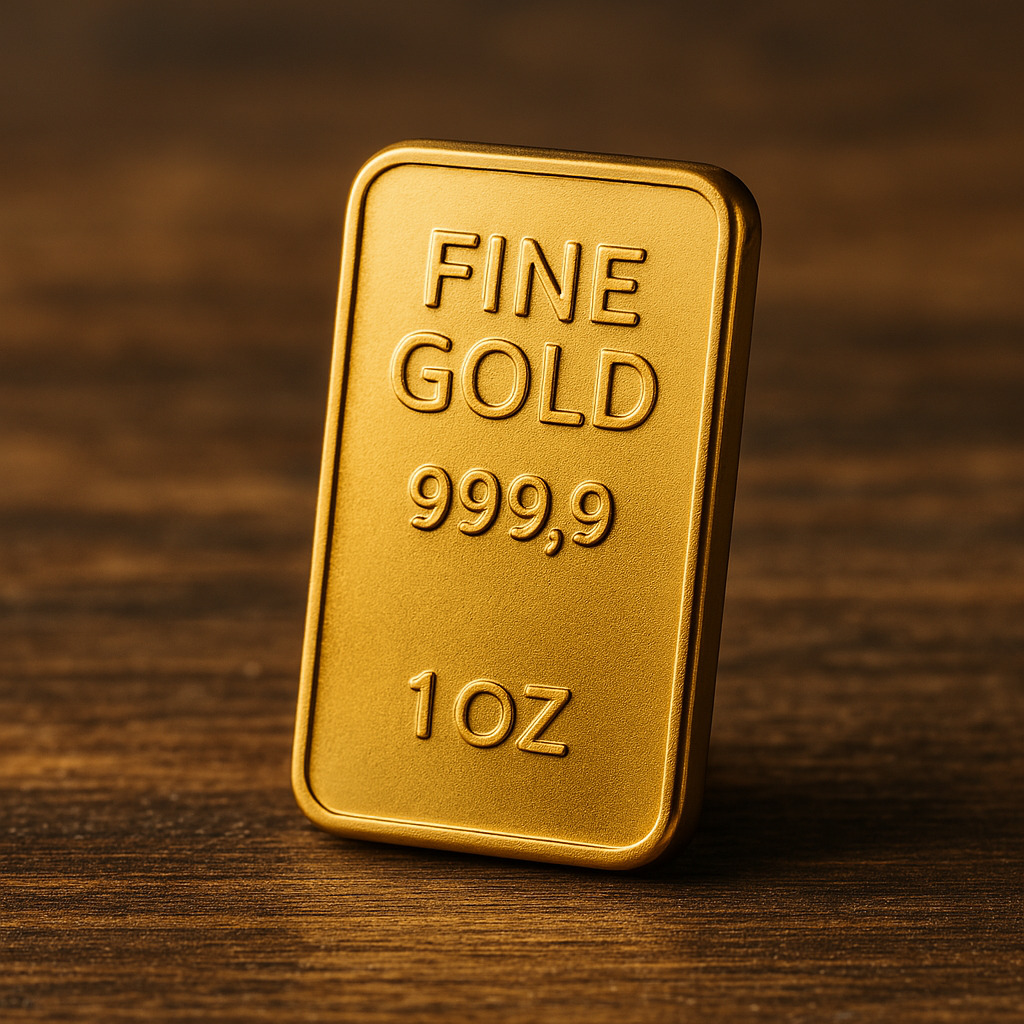
24K gold (999.9 fineness) is the purest investment-grade gold you can buy. At approximately $148 per gram in mid-2026, it is the preferred format for institutional buyers, central bank reserves, and serious long-term investors. Every gram you buy is 99.99% gold — nothing else. If your primary goal is wealth preservation and maximum resale liquidity globally, 24K gold bars are the right choice.
22K gold (916 fineness) contains 91.6% gold and is the preferred karat across the Middle East, India, and South Asian jewellery markets. It commands strong premiums in these cultural gold markets and is ideal for investors who want gold that functions both as a financial asset and as jewellery. 22K gold bars from Africa are available at mine-direct prices that significantly undercut European and US retail dealers.
18K gold (750 fineness) is 75% pure and is the dominant European jewellery karat. It is more durable than 24K for everyday wear but carries a lower gold content per gram, making it less efficient for pure investment purposes.
If you are unsure which karat fits your goals, the services page includes investment consultation to help you structure the right purchase for your situation.
How to Buy Gold Bars Safely Online from Africa in 2026
Africa is home to six of the world’s most productive gold-mining nations — and mine-direct pricing from this continent offers some of the most competitive gold bar prices available anywhere.
Uganda, Ghana, the DRC, Tanzania, Mali, and Kenya together produce a significant share of the world’s annual gold output, which means buyers with the right supplier access can acquire certified gold at prices that beat retail dealers in London, New York, or Dubai by thousands of dollars per kilogram.
Buying gold safely online, however, requires knowing how to separate legitimate licensed exporters from the many fraudulent operators that prey on international buyers.
The essential steps are these: verify the supplier holds a valid mineral dealer licence in their operating country; confirm they provide an independent assay certificate from an accredited laboratory such as SGS or Bureau Veritas before any payment changes hands; ensure all shipments travel with a licensed carrier like Brinks or DHL with declared-value insurance; and insist on complete export documentation including a Certificate of Origin, commercial invoice, and AML/KYC compliance records.
The full checklist is covered in the how to buy gold bars safely guide, and the how to check if a gold supplier is legitimate article walks you through every verification step in detail. Both are essential reading before you send any funds.
The Best Forms of Gold Investment in 2026
Beyond gold bars, serious investors in 2026 are also considering the full spectrum of physical gold investment formats.
Gold bullion bars remain the most cost-efficient format per gram, with the lowest premiums above spot. A 1kg gold bar at today’s spot rate of approximately $139,390 comes with a smaller percentage premium than a 1g bar, making larger purchases more economical for investors with the capital.
Gold nuggets from Africa are a compelling alternative for collectors and investors who want a natural, uncertified-by-the-mint product with provenance and rarity value. African gold nuggets from Uganda, Congo, and Mali carry 85–95% natural purity and typically trade at a 10–25% premium above their melt value — making them interesting assets for buyers who understand the collector market.
Gold coins and rounds — particularly Krugerrands from South Africa — are highly liquid, globally recognised, and often CGT-exempt in certain jurisdictions. Gold coins from Africa are available with certified authenticity and are ideal for investors who want smaller, more divisible units of gold that are easy to sell quickly.
Gold dust from alluvial mining zones in Kenya, Uganda, and Ghana is the most affordable entry point for investors with smaller budgets who want direct exposure to mine-output gold. Buy gold dust from Africa at per-gram pricing with the same rigorous certification applied to bars and bullion.
Can You Ship Gold from Africa to the USA, UK, or UAE?
Yes — and this is one of the most important practical questions for international buyers. Investment-grade gold bullion (HS code 7108.12) enters the United States duty-free when properly declared at a CBP port of entry with full documentation. VAT-exempt treatment applies in the UK for investment-grade gold over 995 fineness. In the UAE, gold imports through Dubai’s DMCC framework are tax-free and the emirate functions as one of the world’s largest re-export hubs for African gold.
Gold Bars For Sale Africa manages the complete export documentation package on every shipment — export permit, assay certificate, Certificate of Origin, commercial invoice, AML/KYC records, and customs preparation for your destination country.
All gold travels with Brinks or DHL insured armoured cargo with GPS tracking and declared full-value insurance, delivering to the USA, UK, UAE, and Europe within 3–8 business days. The export gold from Africa guide covers every country-specific requirement in detail.
Gold as an Inflation Hedge: Does It Still Work in 2026?
The relationship between gold and inflation is one of the most debated topics in macroeconomics. The short version: gold does not track inflation month-by-month, but over 10+ year periods it has consistently maintained purchasing power against fiat currency debasement better than almost any other asset class.
In 2026, with many central banks still grappling with the aftermath of aggressive stimulus programs and money supply expansion, the long-run case for gold as a hedge against monetary inflation remains as sound as it has ever been. The USD has lost approximately 25% of its purchasing power since 2020. An ounce of gold held since 2020 has done substantially better than that. For investors concerned about the long-term trajectory of paper currency, building a physical gold portfolio is one of the most straightforward responses available.
How Much of Your Portfolio Should Be in Gold in 2026?
There is no universal answer, but institutional guidance has converged around a range of 5–20% depending on risk profile and time horizon. Conservative investors nearing retirement who need capital preservation may target the higher end of that range. Aggressive growth investors in their 30s may be comfortable at the lower end, viewing gold as insurance rather than a primary allocation.
What has shifted in 2026 is the urgency of the question. When gold is up 40% year-on-year and institutional analysts are projecting further gains, the cost of underweighting gold in a portfolio becomes more visible. The investors who will regret 2026 most are those who spent the year asking whether gold is a good investment instead of acting on the answer. To get started, contact the team at Gold Bars For Sale Africa for a free, no-obligation gold price quote and investment consultation tailored to your budget and goals.
The Verdict: Is Gold a Good Investment in 2026?
Every major indicator — price trajectory, central bank demand, geopolitical risk, institutional forecasts, and the structural debasement of fiat currencies — points in the same direction. Gold is not just a good investment in 2026.
For investors who do not yet have meaningful physical gold exposure, it may be the most important allocation decision of the decade. The question is no longer whether to buy gold — it is how to buy it correctly, from a trusted, licensed, and documented source at the best price available.
Browse the full range of certified African gold products at Gold Bars For Sale Africa, or read the blog and resource centre for deeper guides on gold prices across Africa, export requirements, supplier verification, and investment strategy. The knowledge you need is there. The gold is there. The decision is yours.