Gold Price Per Gram

Gold Price Per Gram

Current Gold Price Per Gram 2026 — Buy Gold Bars Directly from Africa at Source Prices

The current gold price per gram in 2026 sits at approximately $139 USD for pure 24-carat gold, based on live LBMA spot data. In Uganda and the wider East African market, that translates to roughly 560,000–580,000 UGX per gram of 24K gold, once foreign exchange rates and local dealer spreads are applied.

But here is what most buyers never discover: the price you see on a gold-price ticker is not the price most investors actually pay. Understanding the gap between the live gold spot price per gram and what you are charged at retail — and knowing how to close that gap — is one of the most valuable things a serious gold buyer can learn.


What Is the Gold Price Per Gram Right Now in 2026?

The gold price per gram today is determined by the London Bullion Market Association (LBMA) fix, updated twice every trading day. The global spot price is quoted in troy ounces, but for most individual investors — especially those buying gold bars of 1g, 5g, 10g, or 100g — the gram price is the practical unit.

Here is a quick reference for current indicative gold prices per gram by purity:

Purity Carats Approx. Price Per Gram (USD)
999.9 fine 24K ~$139
916 fine 22K ~$127
750 fine 18K ~$104
585 fine 14K ~$81
417 fine 10K ~$58

These figures represent bare spot pricing. What any given buyer actually pays depends on purity, form factor, sourcing channel, and how many intermediaries sit between the mine and the end buyer. That last variable is where Africa-sourced gold creates a decisive commercial advantage.


Why the Retail Gold Price Per Gram Is Higher Than Spot

When most people look up the gold price per gram, they see the raw commodity figure. What they do not see — until it appears on an invoice — are the layers stacked on top:

Fabrication premiums — the cost of refining and minting metal into a bar or coin form.

Distribution markups — each time a gold bar changes hands between refiner, wholesaler, regional distributor, and retailer, a margin is added.

Brand premiums — well-known mints and refiners (Perth Mint, PAMP Suisse, Royal Mint) charge extra for their name, their packaging, and their certificates.

Small-unit premiums — buying a 1g or 5g bar costs proportionally far more per gram than buying a 1kg bar, because fabrication cost does not scale linearly with weight.

By the time a retail investor in Europe, North America, or the Gulf pays for their gold, they may be 8–15% above the live gold spot price per gram — and often more for small denominations or premium brands.

The solution is not to accept these markups as inevitable. It is to buy closer to the source.

14K Gold Price Per Gram


The Africa Advantage: Buy Gold Bars at Near-Spot Prices

Africa produces a significant share of the world’s annual gold output. Countries including Uganda, Ghana, the Democratic Republic of Congo, Tanzania, Mali, and Kenya sit on some of the richest gold-bearing geology on earth. When you buy gold bars in Africa through a compliant, licensed exporter, you are dealing at a point in the supply chain that is far upstream of the retail markups paid by buyers in distant markets.

Gold Bars For Sale Africa Ltd sources directly from licensed mines and early-stage refiners across Uganda, Ghana, Congo, and Tanzania. The premium above the live gold price per gram is just 1–3% — compared to the 8–15% that is typical at Western retail. That differential is real money on any meaningful purchase volume.

This is not about cutting corners. It is about removing unnecessary intermediaries through a professional, documented, fully compliant supply chain.


Understanding 24K vs 22K Gold Price Per Gram: Which Should You Buy?

One of the most common questions from first-time gold buyers is whether to buy 24K or 22K gold — and how the difference affects the price per gram they pay.

24K gold (999.9 fine) is the purest form available commercially. At roughly $139 per gram in 2026, it commands the highest price per gram and is the preferred choice for investment-grade gold bars and bullion. Every gram you pay for is gold. There is no alloy dilution.

22K gold (916 fine) contains 91.6% gold and 8.4% alloy metals. The 22K gold price per gram is therefore lower — approximately $127 per gram at current spot — and 22K bars are widely used by buyers who want investment-grade metal at a slightly lower entry price per unit.

Browse certified 24K gold bars for sale from Africa to compare sizes and current pricing linked to live spot.

If you are buying primarily for investment and wealth preservation, 24K gold bars offer the cleanest valuation and the most liquid resale. If you need gold that bridges investment and industrial or jewellery use, 22K is a proven and practical choice.


Gold Price Per Gram in Uganda: The Local Market Explained

For buyers operating in or through Uganda — one of East Africa’s key gold trading hubs — the gold price per gram in Uganda is governed by a combination of global spot rates, the Uganda shilling/USD exchange rate, and the premiums applied by local dealers in Kampala.

As of mid-2026, the gold price per gram in Kampala sits in the range of 560,000–580,000 UGX for 24K gold, though this moves daily with both global spot and UGX/USD fluctuations. Local gold shops and dealers in Kampala typically apply their own spreads on top of this, meaning retail prices are higher again.

The smarter approach for anyone buying meaningful quantities of gold in Uganda is to work through a regulated exporter like Gold Bars For Sale Africa, rather than informal street dealers, whose pricing, purity claims, and documentation are inconsistent and often non-compliant with international standards.

Buying gold in Uganda through a licensed channel also gives you legal export documentation — essential if your gold is moving out of the country into global markets.


How Gold Bar Size Affects the Price Per Gram You Pay

Not all gold bar sizes carry the same effective price per gram. This is one of the most important — and least discussed — nuances in gold buying.

1g gold bar — highest fabrication premium per gram. Convenient but expensive per unit of metal.

5g and 10g gold bars — popular entry points for retail investors; still carry a meaningful premium over spot.

50g and 100g gold bars — the sweet spot for many investors balancing liquidity, storage, and price efficiency.

500g and 1kg gold bars — closest to raw wholesale pricing; the most cost-efficient per gram for serious investors and institutions.

When you buy gold bars directly from Africa, the premium above spot is lower at every size compared to Western retail — but the per-gram efficiency of larger bars still applies.


Gold Nuggets vs Gold Bars: Price Per Gram Differences

Beyond bars, buyers sourcing gold from Africa frequently ask about gold nugget prices per gram versus refined bar prices. The two products sit at very different points of the value chain.

Natural African gold nuggets — sourced from artisanal mining zones in Congo, Uganda, and Mali — typically carry a natural purity of 85–95%. The price per gram reflects that purity level, and nuggets are priced below the 24K spot benchmark accordingly. They are ideal for collectors, jewellers who will refine the material themselves, or buyers seeking tangible, unprocessed gold.

Certified gold bars — refined to 99.99% or 91.6% purity, assay-certified, and bar-stamped — carry a higher price per gram but offer the standardisation, documentation, and liquidity that most institutional buyers and investors require.

View natural African gold nuggets for sale alongside certified bars to compare value across both product types.


Gold Dust Price Per Gram: An Entry Point for Smaller Buyers

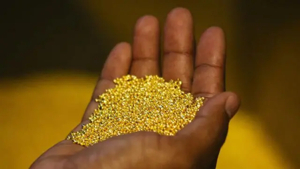
For buyers looking to access African gold at the smallest unit scale, gold dust offers a viable and cost-effective route. Alluvial gold dust from Kenya, Uganda, and Ghana’s Migori Belt is available at flexible per-gram pricing, making it one of the most accessible forms of physical gold sourced from Africa.

The gold dust price per gram will naturally reflect its non-refined state — typically below 24K bar prices — but for buyers with refinery access, or those seeking raw input material at close-to-source pricing, gold dust is a practical option.

Explore gold dust available from Africa with pricing that reflects the live spot price per gram, not padded retail rates.


Is Buying Gold From Africa at Source Prices Legal and Safe?

This is a question every serious buyer should ask — and every reputable Africa-based gold supplier should be able to answer completely.

The answer is yes, when done through a properly licensed and documented channel. The key elements of a legally compliant Africa gold purchase are:

Mineral dealer licence — the supplier must hold valid licences in their country of operation (Uganda, Ghana, etc.).

Export permit — every international shipment of gold requires government-issued export documentation.

Assay certificate — independent third-party laboratory confirmation of purity.

AML/KYC compliance — anti-money-laundering and know-your-customer procedures aligned with FATF standards.

Certificate of Origin — confirming the gold’s sourcing country and supply chain.

Gold Bars For Sale Africa provides every one of these documents as a standard part of every transaction. Buyers receive the full compliance package — not just the metal.

This is not an afterthought. It is the framework that allows gold sourced at near-spot African prices to move cleanly into global markets, banks, refineries, and investment portfolios without compliance barriers.


How to Calculate the Real Value of Gold Per Gram Before You Buy

Before any gold purchase, serious buyers should run a simple price-per-gram valuation check. Here is how:

  1. Look up the current LBMA spot price in USD per troy ounce (1 troy oz = 31.1035 grams).
  2. Divide by 31.1035 to get the spot price per gram.
  3. Adjust for purity — multiply by the decimal purity of the gold you are buying (0.9999 for 24K, 0.916 for 22K, etc.).
  4. Add the supplier premium — ask what percentage above spot the supplier is charging (1–3% is competitive for mine-direct African gold; 8–15% signals a heavily intermediated supply chain).
  5. Factor in shipping, insurance, and duty — these are real costs that affect your effective price per gram of gold received.

This calculation tells you whether the price you are being offered reflects the live gold price per gram accurately, or whether you are subsidising layers of margin you do not need to pay.


Build a Long-Term Gold Supply Relationship: The Smart Investor Approach

For investors, traders, or institutions buying gold at volume — whether in kg bars, multiple 100g bars, or ongoing monthly purchases — the most valuable thing is not a single transaction at a good price. It is a structured, repeatable supply relationship that consistently delivers gold close to the real gold price per gram, with reliable compliance and documentation.

Gold Bars For Sale Africa is structured precisely for this kind of relationship. Buyers who engage through the company’s services page can establish ongoing supply agreements that benefit from:

  • Pricing linked to live LBMA spot, updated with each order
  • Consistent documentation and export compliance across every shipment
  • Priority allocation during high-demand periods when spot gold prices are rising sharply
  • Dedicated account support available around the clock

Explore Gold Bars For Sale Africa’s services to understand how an ongoing supply structure works in practice.

Gold Price Per Gram


Frequently Asked Questions: Gold Price Per Gram

What is the current gold price per gram in USD? As of mid-2026, the gold price per gram for 24K gold is approximately $139 USD, based on live LBMA spot rates. This updates continuously during trading hours.

What is the gold price per gram in Uganda shillings? The current indicative price is approximately 560,000–580,000 UGX per gram for 24K gold, depending on the prevailing UGX/USD exchange rate and dealer margin.

Is 24K or 22K gold a better investment? For pure investment purposes, 24K gold bars offer the cleanest valuation — every gram is gold, with no alloy dilution. 22K gold is excellent for buyers who also want flexibility for jewellery or industrial applications.

Can I buy gold bars directly from Africa? Yes. Through a licensed and compliant exporter like Gold Bars For Sale Africa Ltd, investors can source certified gold bars at premiums of just 1–3% above spot — far below the 8–15% typical of Western retail channels.

What documentation should I receive when buying African gold? A compliant purchase should include an assay certificate, export permit, certificate of origin, commercial invoice, and AML/KYC documentation. Contact the team to request a full documentation overview before committing to any purchase.


Partner With the Source: Turn Today’s Gold Price Per Gram Into a Real Advantage

The gold price per gram is live, global, and accessible to anyone with an internet connection. The commercial advantage does not come from knowing the number — it comes from what you do with it.

Buyers who accept retail markups of 10–15% above spot are essentially paying a premium for geography and intermediation. Buyers who source certified gold bars from Africa through a compliant, mine-direct channel pay 1–3% above the live gold spot price — and keep the rest.

If gold prices continue rising — as the sustained rally of 2024–2026 suggests — every percentage point of markup you avoid at the point of purchase compounds directly into the value of your holding.

Partner with Gold Bars For Sale Africa Ltd to buy your gold in Africa: closer to production, closer to the real price per gram, and positioned to benefit from every move in the global market — not just the markups added on top of it.


Related Topics Worth Reading