
Top 6 Gold Mining Companies in South Africa – Ultimate Guide
Gold Mining Companies in South Africa: South Africa’s gold mining sector is experiencing one of the most remarkable financial revivals in its history.
With gold surpassing $5,000 per troy ounce for the first time ever in early 2026, shares of the country’s top gold mining companies in South Africa have posted extraordinary gains on the Johannesburg Stock Exchange (JSE).
Sibanye-Stillwater surged over 400% between January 2025 and early 2026; AngloGold Ashanti climbed 310%; DRDGOLD rose 281%; and Harmony Gold, Gold Fields, and Pan African Resources all posted multi-year highs. These are not marginal movements — they represent one of the strongest bull cycles ever recorded for South African gold equities.
Yet the backdrop to this resurgence is complex. South Africa’s total gold output has declined from a historic peak of 995 tonnes in 1970 to approximately 88–100 tonnes per year today — a reflection of deepening ore bodies, rising extraction costs, and legacy infrastructure challenges.
What the sector lacks in volume it compensates with in value: at $5,000 per ounce, even a declining physical output generates record-level rand revenues for the companies that remain.
Understanding which companies are driving that production, where they mine, and how they are positioned for the future is essential for any investor, analyst, or industry observer researching gold mining companies in South Africa.
Major Gold Mining Companies in South Africa — Overview Table
| Company | JSE Ticker | NYSE/ASX | 2025 SA Output (est.) | Key SA Mines | Market Cap (est.) |
| Harmony Gold Mining | HAR | — | ~43 tonnes | Kusasalethu, Doornkop, Moab Khotsong | ~ZAR 80B+ |
| Gold Fields Ltd | GFI | GFI (NYSE) | ~25 tonnes (SA share) | South Deep | ~ZAR 150B+ |
| Sibanye-Stillwater | SSW | SBSW (NYSE) | ~40 tonnes | Driefontein, Kloof, Beatrix | ~ZAR 200B+ |
| DRDGOLD | DRD | DRD (NYSE) | ~7 tonnes | Far West Gold Recoveries, ERG | ~ZAR 25B+ |
| Pan African Resources | PAN | — | ~7 tonnes | Barberton, Evander, Elikhulu | ~ZAR 35B+ |
| Rand Refinery (private) | — | — | Refining: ~90 tonnes/yr SA | Germiston (LBMA refinery) | Private |

Gold Mining Companies in South Africa Explained
Harmony Gold — The Biggest South African Gold Miner
When analysts rank the largest gold mining companies in South Africa, Harmony Gold Mining Company Limited (JSE: HAR) consistently takes the top spot.
As the country’s single largest producer of gold within South Africa, Harmony operates a diversified portfolio of underground gold mines across the Witwatersrand Basin in Gauteng and North West Province, as well as operations in the Free State.
In its financial year 2024 (ended June 30, 2024), Harmony produced 43.5 tonnes (approximately 1.4 million ounces) from its South African assets — the highest domestic gold output of any company in the country.
Harmony’s major South African mines include Kusasalethu in the Carletonville area (one of the deepest and most productive shafts on the Witwatersrand), Doornkop in Soweto, Moab Khotsong — acquired from AngloGold Ashanti in 2018 — Bambanani and Tshepong in the Free State, and Masimong in the Welkom area.
Collectively, these mines give Harmony the deepest operational footprint in the South African gold mining industry, with shaft depths exceeding 4 kilometres at some operations.
Beyond South Africa, Harmony holds a 50% stake in the Hidden Valley gold and silver mine in Papua New Guinea and is the sole owner of the Wafi-Golpu copper-gold project — one of the largest undeveloped copper-gold deposits in the world, located in the Morobe Province of PNG.
This international diversification distinguishes Harmony from purely domestic peers and provides long-term production optionality at a time when its South African mines are ageing.
The company’s share price has been one of the top performers among JSE-listed gold stocks in the current bull market, benefiting directly from record-high gold prices in rand terms.
| Founded: 1950 (Harmony Gold)
HQ: Randfontein, Gauteng JSE Ticker: HAR CEO: Peter Steenkamp |
SA Mines: Kusasalethu, Doornkop, Moab Khotsong, Bambanani, Tshepong
International: Hidden Valley (PNG), Wafi-Golpu (PNG) 2024 SA Output: ~43.5 tonnes (1.4M oz) LBMA Ownership: 10% stake in Rand Refinery |
Gold Fields — South Deep and Global Diversification
Gold Fields Limited (JSE: GFI; NYSE: GFI) is one of the most internationally diversified South African gold mining companies in existence, operating nine producing mines across South Africa, Australia, Ghana, Chile, and Peru.
In 2025, the company reported total attributable gold-equivalent production of 2.1 million ounces globally, rising to 2.44 million ounces in 2025 full year — one of its strongest annual performances.
Its South African asset is the singular but substantial South Deep Gold Mine in Westonaria, West Rand, Gauteng — one of the largest known gold deposits still in development anywhere on earth.
South Deep holds proved and probable mineral reserves of approximately 30 million ounces of gold — enough to sustain mining for decades.
For years it was considered Gold Fields’ most challenging asset, plagued by mechanisation difficulties and falling short of production targets. That has changed decisively.
In Q3 2025, South Deep produced 78,000 ounces and met its quarterly plan — a milestone that illustrated just how far the operation has come since being restructured.\
All-In Costs at South Deep grew only 3% year-on-year, demonstrating the mine’s emerging leverage to higher gold prices without runaway cost escalation.
Gold Fields’ stock has been one of the standout performers among JSE gold shares in the current bull market, with Sibanye-Stillwater, Gold Fields, and Harmony all recording gains of 20% or more in the first three weeks of January 2026 alone.
For investors asking which gold mining company to invest in on the JSE, Gold Fields offers a compelling combination of South African deep-level exposure through South Deep and globally diversified production across three continents.
| Founded: 1998 (from Gold Fields of SA, est. 1887)
HQ: Johannesburg, Gauteng JSE / NYSE: GFI CEO: Mike Fraser |
SA Mine: South Deep, West Rand, Gauteng
SA Reserves: ~30M oz proved & probable 2025 SA Output: ~25 tonnes (SA share, ~300koz) Global Output: ~2.44M oz gold-equivalent (2025) |
Sibanye-Stillwater — South Africa’s Most Diversified Precious Metals Miner
Sibanye-Stillwater (JSE: SSW; NYSE: SBSW) is one of the world’s largest precious metals mining companies and, within South Africa, the operator of some of the most historically significant deep-level gold mines on the Witwatersrand.
Originally spun off from Gold Fields in 2013 as a pure South African gold company, Sibanye has transformed into a globally diversified precious metals group with gold, platinum group metals (PGMs), copper, and battery metals assets spanning South Africa, the United States, Zimbabwe, and Finland.
Sibanye’s South African gold operations — concentrated on the Witwatersrand Gold Fields in Gauteng and in the Free State — include the iconic Driefontein and Kloof mines in the Carletonville area (collectively forming the Kloof-Driefontein Complex), the Beatrix mine in the Free State, and the Ezulwini mine on the West Rand.
Together, these operations produce approximately 40 tonnes of gold per year from South Africa alone — roughly 40% of the country’s total output — making Sibanye the second-largest South African gold producer after Harmony.
The company attracted landmark institutional attention in October 2025 when the Public Investment Corporation (PIC) of South Africa — the country’s state-owned asset manager — increased its stake in Sibanye-Stillwater to 20.42%, cementing itself as the largest single shareholder.
This move was interpreted as a powerful vote of confidence in the company’s long-term value, particularly its gold assets at record price levels.
Sibanye’s JSE share price surged more than 400% between January 2025 and early 2026 — the strongest performance among all South African gold mining stocks over that period.
Sibanye’s PGM and Battery Metals Diversification
Beyond gold, Sibanye’s platinum group metals (PGMs) operations in the Bushveld Complex — including the Rustenburg, Kroondal, Marikana, and Kloof-Driefontein operations — make it the world’s second-largest producer of platinum.
The company has also invested in lithium through the Keliber project in Finland, targeting battery-grade lithium carbonate production beginning in 2026.
This multi-metal diversification protects Sibanye from the volatility of any single commodity and positions it uniquely among South African gold mining stocks as a company that benefits from multiple structural growth trends simultaneously.
| Founded: 2013 (spun off from Gold Fields)
HQ: Johannesburg, Gauteng JSE / NYSE: SSW / SBSW CEO: Neal Froneman |
SA Gold Mines: Driefontein, Kloof, Beatrix, Ezulwini
PGM Mines: Rustenburg, Kroondal, Marikana 2025 SA Gold Output: ~40 tonnes (est.) PIC Stake: 20.42% (largest shareholder) |
DRDGOLD — Profitably Mining South Africa’s Historical Gold Tailings
DRDGOLD Limited (JSE: DRD; NYSE: DRD) occupies a unique and increasingly important position in the South African gold mining landscape.
Rather than extracting gold from underground rock, DRDGOLD specialises in surface retreatment of gold tailings — the vast dumps of previously processed rock that dot the Witwatersrand, containing residual gold that was unrecoverable with the technology available when the original mines operated.
As metallurgical technology has advanced and gold prices have risen, these tailings have become commercially viable, low-cost gold sources that DRDGOLD extracts with significantly lower capital intensity than conventional underground mining.
DRDGOLD’s two primary operations are Far West Gold Recoveries (FWGR) in Carletonville and the Ergo Mining Proprietary Limited (ERGO) operation east of Johannesburg. Together, these operations process millions of tonnes of tailings annually and produce approximately 7 tonnes of gold per year.
The company’s all-in sustaining costs are among the lowest in the South African gold mining sector — a function of the relatively shallow, mechanised, and less labour-intensive nature of surface operations compared to deep underground mines.
DRDGOLD’s JSE share price rose 281% between January 2025 and early 2026, outperforming many underground gold producers in percentage terms.
Sibanye-Stillwater holds a majority stake in DRDGOLD, having increased its shareholding progressively since 2018. This relationship gives DRDGOLD access to Sibanye’s extensive tailings footprint across the Witwatersrand and provides a pipeline of future retreatment projects.
As South Africa’s gold output from underground mines continues its structural decline, DRDGOLD’s surface gold retreatment model represents an increasingly important source of low-cost, lower-risk production from the Witwatersrand Basin’s enormous legacy tailings resource — estimated at 6 billion tonnes of historical mine residue.
| Founded: 1895 (Crown Mines; modern DRDGOLD from 2000s)
HQ: Johannesburg, Gauteng JSE / NYSE: DRD Majority Owner: Sibanye-Stillwater (~50.1%) |
Operations: Far West Gold Recoveries, Ergo
Mining Type: Surface tailings retreatment 2025 Output: ~7 tonnes (est.) Cost Profile: Among lowest AISC in South Africa |

Pan African Resources — Barberton Mines and the Elikhulu Tailings Plant
Pan African Resources PLC (JSE: PAN; AIM: PAF) is a mid-tier South African gold producer that has distinguished itself through a combination of high-grade underground mining at its Barberton Mines and efficient surface retreatment through its Elikhulu Tailings Treatment Plant at Evander.
The company produced over 128,000 ounces (approximately 4 tonnes) of gold in the first half of its financial year to December 2025 — a 51% increase — and has used the resulting cash windfall to pay down more than 65% of its debt, placing it on track to be debt-free within a year
The Barberton Mines, located in Mpumalanga, are among the oldest producing gold mines in South Africa — first worked in 1886, the same year as the Witwatersrand discovery.
Despite their age, Barberton’s mines continue to produce high-grade gold ore at grades that are exceptional by South African standards.
The Elikhulu Tailings Treatment Plant at Evander, commissioned in 2018, has become one of the most cost-effective gold production facilities in the country, processing 1.2 million tonnes of tailings per month at low unit costs.
Pan African Resources’ share price has almost trebled in the year to early 2026, making it one of the standout performers among smaller JSE gold stocks
Pan African Resources also holds exploration projects that provide long-term production optionality, including the Royal Sheba expansion at Barberton and potential new developments on its expansive Evander landholding.
For investors looking at smaller gold mining companies in South Africa with strong cash flow, a debt-reduction trajectory, and leverage to rising gold prices, Pan African Resources is one of the most compelling options on the JSE and AIM.
| Founded: 2000 (Pan African Resources)
HQ: Johannesburg, Gauteng Listings: JSE: PAN | AIM: PAF CEO: Cobus Loots |
Key Mines: Barberton (Mpumalanga), Evander (Mpumalanga)
Tailings Plant: Elikhulu (1.2Mtpm capacity) H1 2025/26 Output: 128,296 oz (51% increase) Debt Status: 65%+ paid down; target: debt-free 2026/27 |
Rand Refinery — The Backbone of South African Gold Processing
No account of gold mining companies in South Africa is complete without the Rand Refinery — not a mining company itself, but the institutional cornerstone upon which the entire South African gold production chain rests.
Established in 1920 by the Chamber of Mines of South Africa, Rand Refinery is based in Germiston, Gauteng, and holds the distinction of being Africa’s only refinery accredited by the London Bullion Market Association (LBMA) Good Delivery standard
Rand Refinery has refined more than 50,000 tonnes of gold in its century-long history — nearly one third of all the gold ever mined in human history. Its annual refining capacity stands at 450–600 tonnes of gold, processing not only South African mine output but also gold from across Africa, North America, and Asia.
In its financial year 2024, Rand Refinery processed 90 tonnes of South African gold from 34 depositors — predominantly the country’s large-scale gold mining companies — which represents close to 100% of the formal large-scale mining gold produced in South Africa.
Rand Refinery is privately owned by the five major South African gold mining groups: AngloGold Ashanti (42.41%), Sibanye-Stillwater (33.15%), DRDGOLD (11.3%), Harmony Gold (10%), and Gold Fields (2.76%).
This collective ownership model reflects the refinery’s role as shared industry infrastructure rather than a competitive commercial entity. Rand Refinery is also the producer of the Krugerrand gold bullion coin — the world’s first modern gold investment coin, launched in 1967 and still the most widely recognised bullion coin globally, with more than 60 million coins minted to date
| Founded: 1920 (established by Chamber of Mines)
Location: Germiston, Gauteng, South Africa LBMA Status: Full Member — Good Delivery List Refining Capacity: 450–600 tonnes of gold per year |
Total gold refined: 50,000+ tonnes (est. 1/3 of all gold ever mined)
SA gold processed: ~90 tonnes/yr from 34 depositors Famous product: Krugerrand coin (60M+ minted since 1967) Owners: AngloGold (42.4%), Sibanye (33.2%), DRDGOLD (11.3%), Harmony (10%), Gold Fields (2.8%) |
JSE Gold Mining Shares — Performance in the 2025–2026 Bull Market
The gold bull market of 2025–2026 has been transformative for JSE-listed gold mining shares. Gold cracked $5,000 per troy ounce for the first time in early 2026, driving the JSE All Share Index (ALSI) above 124,500 — having broken 100,000 for the first time only in July 2025. The performance of individual gold stocks has been spectacular by historical standards:
JSE Gold Mining Stock Performance — January 2025 to Early 2026
| Company | JSE Ticker | Gain Since Jan 2025 | 2026 YTD Gain (Jan) | Key Driver |
| Sibanye-Stillwater | SSW | 400%+ | 20%+ | Gold + PGM price surge; PIC 20.4% stake |
| AngloGold Ashanti | ANG | 310% | Strong | Record gold price; global diversification |
| DRDGOLD | DRD | 281% | Strong | Low-cost tailings; leverage to spot price |
| Pan African Resources | PAN | ~200% | 20%+ | 51% output growth; debt paydown |
| Harmony Gold | HAR | Strong gains | 20%+ | SA’s largest domestic producer |
| Gold Fields | GFI | Strong gains | 20%+ | South Deep milestone; global portfolio |
These gains reflect a broader gold supercycle driven by central bank accumulation — particularly from Asian central banks — falling confidence in the US dollar, persistent geopolitical tensions, and record demand from institutional investors seeking safe-haven assets.
JPMorgan had forecast gold reaching $5,000/oz in Q1 2026; Bank of America’s head of metals research, Michael Widmer, projected gold hitting $6,000 per ounce in the months ahead.
For investors tracking South African gold mining stocks on the JSE, the question is no longer whether the bull market is real — it is how much further it has to run.
Challenges Facing Gold Mining Companies in South Africa
Despite record gold prices, the structural challenges of South Africa’s deep-level underground gold mining industry are real and well-documented. Understanding these challenges is essential for any analyst, investor, or buyer evaluating South African gold mining companies:
Deep-Level Mining Costs
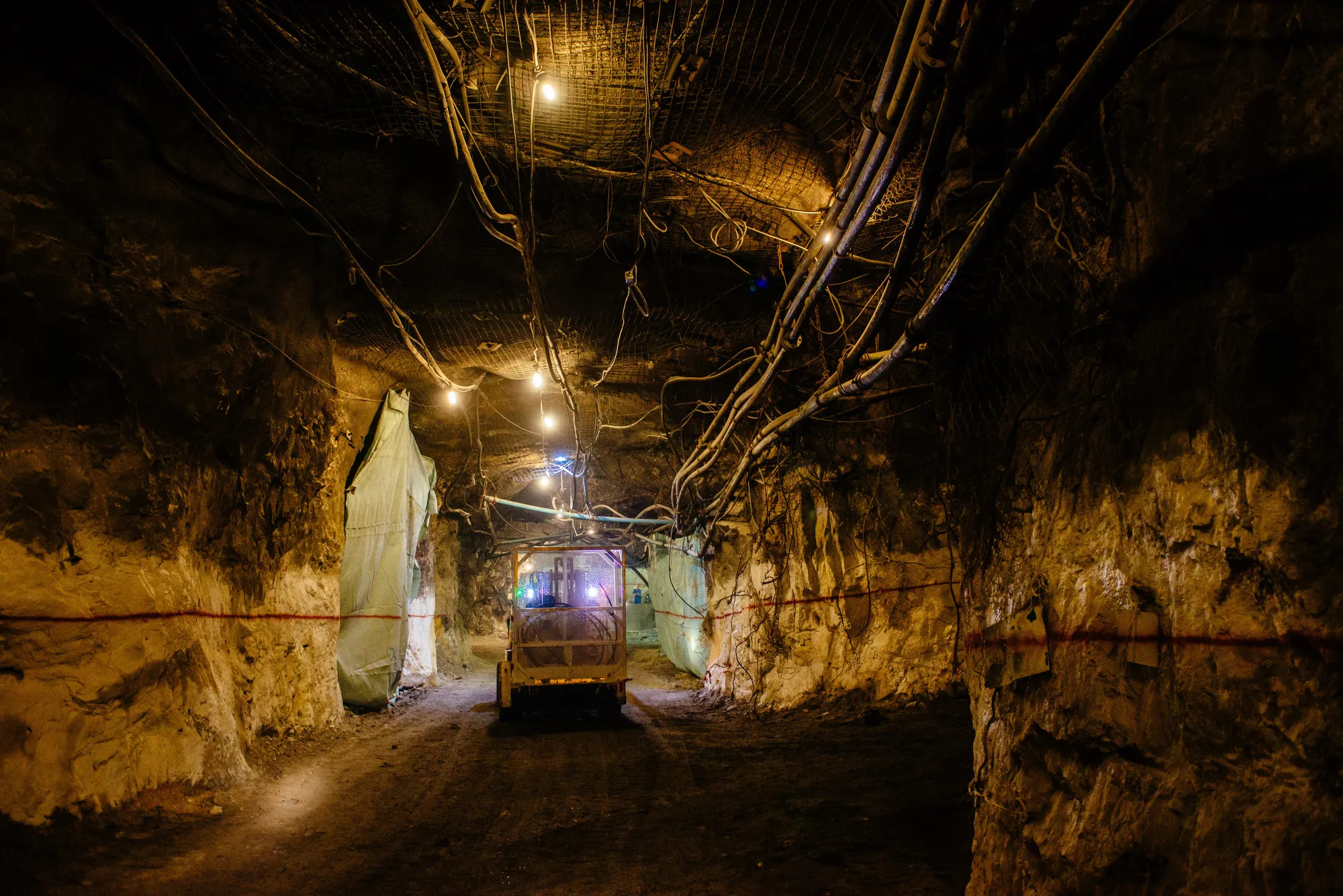
South Africa’s Witwatersrand mines are among the deepest in the world, with some shafts extending beyond 4 kilometres below the surface. At these depths, extreme heat, seismic risk, and complex logistics make mining extraordinarily expensive.
All-In Sustaining Costs (AISC) at South African underground operations typically run between $1,400 and $1,800 per ounce — among the highest in the global gold mining industry.
At current gold prices above $4,700 per ounce, margins are healthy, but any significant price correction would put pressure on marginal South African operations.
Eskom and the Energy Challenge
South Africa’s chronic electricity supply crisis, rooted in the deterioration of the state utility Eskom, has been a persistent operational and cost burden for the country’s gold miners.
Load shedding — scheduled rolling power cuts — forces mining companies to run costly diesel generators or curtail production.
Energy now accounts for over 20–30% of mining operational costs at many South African gold mines. The industry’s response has been substantial investment in on-site solar and renewable energy capacity, with Sibanye-Stillwater, Harmony, and Gold Fields all committing significant capital to energy self-sufficiency.
Labour Relations
The South African gold mining industry employs approximately 94,000 people directly in the formal sector — a workforce represented primarily by the Association of Mineworkers and Construction Union (AMCU) and the National Union of Mineworkers (NUM).
While labour relations have stabilised since the devastating strikes of 2012–2014, they remain a structural operational risk for all underground mining companies, adding to the complexity and cost of deep-level gold extraction.
Declining Ore Grades
As the highest-grade portions of South Africa’s gold deposits are progressively mined out, average ore grades continue to fall. What was once 10–20 grams per tonne (g/t) in the richest zones now averages 4–8 g/t across most active operations.
Lower grades mean more rock must be processed to produce each ounce of gold, increasing costs and reducing the overall efficiency of production.
Outlook for South African Gold Mining Companies in 2026 and Beyond
The medium-term outlook for South African gold mining companies is the most constructive it has been in a generation. At current gold prices above $4,700 per ounce and with multiple analyst forecasts calling for $5,000–$6,000 per ounce through 2026–2027, every major South African gold producer is generating record cash flows in rand terms. Key themes to watch in the sector include:
- South Deep’s maturing production profile: Gold Fields’ South Deep mine, holding one of the world’s largest undeveloped gold reserves, is finally delivering on its promise. Continued production growth at South Deep is the single biggest upside catalyst for Gold Fields’ South African contribution.
- Pan African’s debt-free milestone: Pan African Resources’ goal of eliminating all debt by 2026/27 will release substantial cash flow for dividends, reinvestment, or acquisitions — a significant re-rating catalyst.
- Sibanye’s battery metals optionality: The Keliber lithium project in Finland, targeting production in 2026, adds a new commodity to Sibanye’s portfolio precisely when battery metals demand is accelerating with global EV adoption.
- DRDGOLD’s tailings pipeline: With Sibanye’s backing and access to the Witwatersrand’s estimated 6 billion tonnes of historical tailings, DRDGOLD‘s low-cost growth pipeline is potentially enormous at current gold price levels.
- Harmony’s Wafi-Golpu catalyst: A final investment decision on the massive Wafi-Golpu copper-gold project in Papua New Guinea would represent a transformational growth event for Harmony Gold.
- Rand Refinery expansion: Growing African gold flows through Germiston are increasing the Rand Refinery’s throughput beyond South African mine output, positioning it as continental Africa’s gold processing hub.
South African Gold Mining Companies — 2026 Outlook Summary
| Company | Gold Price Leverage | Key Growth Catalyst | Analyst Sentiment | Risk Level |
| Harmony Gold (HAR) | Very High (SA-focused) | Wafi-Golpu FID; SA output stability | Positive | Moderate (deep-level risk) |
| Gold Fields (GFI) | High (global + SA) | South Deep ramp-up; Salares Norte | Positive | Low-Moderate (diversified) |
| Sibanye-Stillwater (SSW) | High (gold + PGMs) | Keliber lithium; PGM recovery | Positive/Cautious | Moderate (multi-commodity) |
| DRDGOLD (DRD) | Very High (low cost) | Tailings pipeline expansion | Very Positive | Low (surface operations) |
| Pan African Resources (PAN) | Very High (low AISC) | Debt-free milestone; Royal Sheba | Very Positive | Low-Moderate |
Conclusion: South Africa’s Gold Mining Companies in a Record-Price Era
The gold mining companies in South Africa are navigating a defining moment. Structural challenges — declining ore grades, deep-level costs, energy constraints, and labour complexity — have reduced total output to a fraction of the country’s historic peak.
But at gold prices above $4,700 per ounce — and with credible analyst forecasts of $6,000 by the end of 2026 — these companies are generating extraordinary cash flows and delivering historic returns to their shareholders.
The JSE’s gold sector is in the middle of a supercycle, and every company profiled in this article — Harmony Gold, Gold Fields, Sibanye-Stillwater, DRDGOLD, Pan African Resources, and Rand Refinery — is positioned to benefit.
Whether you are an investor evaluating JSE-listed gold mining stocks, an analyst tracking South African gold production statistics, or a student of the global mining industry researching how gold is mined and refined in South Africa, the sector offers a compelling study in how world-class geological assets, historic infrastructure, and institutional expertise can continue to generate value even as the easy gold has long since been extracted. South Africa’s gold story is far from over — it is simply entering a new and highly profitable chapter.