
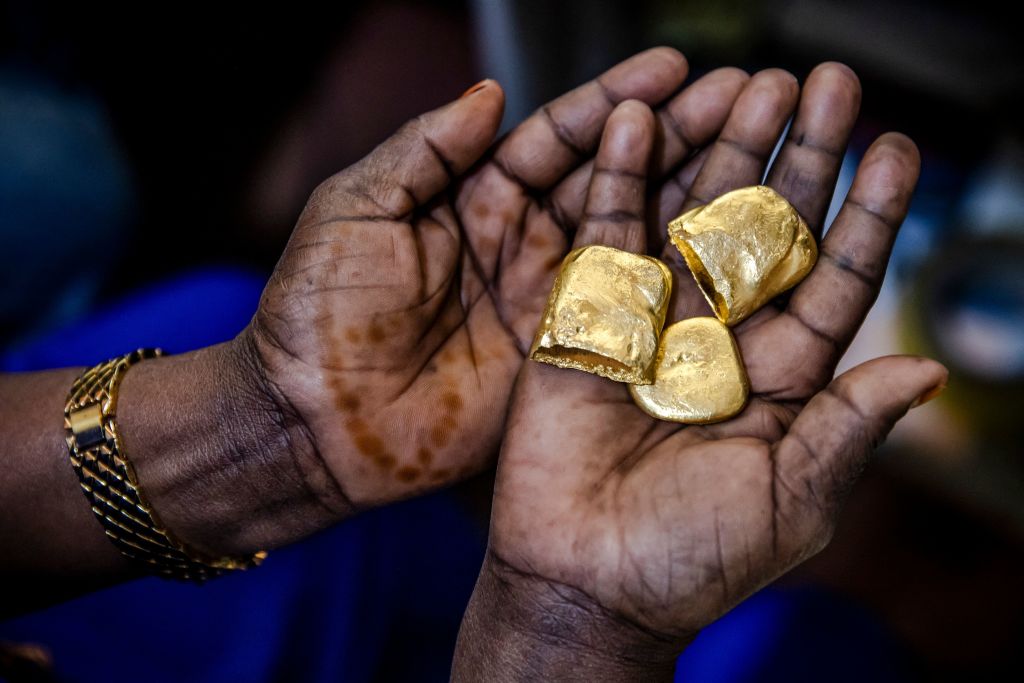
Gold Smuggling in Burkina Faso: Illicit Flows, Lost Billions, Armed Groups, and the State’s Fight to Reclaim Its Most Valuable Resource
Gold smuggling in Burkina Faso is one of the most deeply entrenched, economically devastating, and politically complex forms of illicit trade on the African continent. In a country where gold accounts for over 70–80% of all export earnings and where artisanal and small-scale mining (ASGM) employs an estimated one to two million people, the systematic diversion of gold outside official channels is not a marginal problem — it is a structural crisis that drains billions of dollars from the national economy, finances armed groups waging a jihadist insurgency, and corrupts the very institutions meant to govern the sector.
Between 2012 and 2021 alone, Burkina Faso lost an estimated $4.93 billion (FCFA 2.77 trillion) in illicit financial flows from its mining sector, according to the country’s own EITI study. Gold accounted for 61% of that total — approximately $3 billion in illicit gold flows over a single decade.
Annual losses ranged from $147 million in 2016 to a peak of $620 million in 2017. The real-world meaning of those numbers is stark: the EITI study calculated that the same amount of money could have built 15,867 health centres or 88,589 schools across Burkina Faso.
Instead, it flowed untaxed through porous borders into the hands of smuggling networks, corrupt intermediaries, jihadist groups, and foreign refineries in Dubai, Switzerland, and Belgium.
This article examines exactly how gold smuggling in Burkina Faso works — the routes, the actors, the methods, the scale — and what the government is doing about it.
How Much Gold Is Smuggled Out of Burkina Faso Each Year?
Measuring the precise scale of illegal gold exports from Burkina Faso is inherently difficult because the smuggling networks that move this gold are designed to be invisible. However, multiple independent methodologies converge on a consistent picture of enormous informal flows.
SWISSAID, the Swiss development NGO that has become the leading tracker of African gold smuggling, estimates that between 80 and 90 tonnes of gold are produced in Burkina Faso annually — a figure that substantially exceeds official government production statistics, which only capture declared industrial and artisanal output.
The gap between actual production and officially recorded figures is largely explained by the undeclared artisanal gold sector, most of which exits the country through informal, untaxed channels.
The scale of the problem is further illustrated by a key data point from 2019: then-Minister of Mines Oumarou Idani publicly acknowledged that of an estimated 9.5 tonnes of annual artisanal gold output at the time, only 200–400 kilograms were declared officially.
That means less than 5% of artisanal production was formally recorded — and 95% was being smuggled, diverted, or traded through informal channels outside the state’s reach.
Official comptoirs — private gold trading companies licensed to purchase and export artisanal gold — historically captured only about 30% of ASGM production in Burkina Faso, according to EITI data.
The remaining 70% moved through informal networks, representing a systematic failure of the formal gold trading infrastructure that had been in place since gold trading was privatised in 2006.

The Main Gold Smuggling Routes from Burkina Faso
Burkina Faso gold smuggling routes follow the geography of the country’s artisanal mining zones, its porous borders, and the location of less-regulated neighbouring markets that serve as transit hubs to global buyers.
The Togo Corridor: Burkina Faso’s Primary Smuggling Route
The most documented and heavily used gold smuggling route from Burkina Faso runs south through the country’s eastern regions into Togo, particularly through the border town of Cinkansé and onward to Lomé.
The scale of this traffic is confirmed by a telling data point: Switzerland — the world’s largest gold refining nation — imported at least 7 tonnes of gold from Togo in 2014, despite the fact that Togo has no gold mines of its own. That gold was traced back to artisanal mines in Burkina Faso.
In another documented case in February 2016, the Mobile Brigade in Tenkodogo — a major trade hub in central-eastern Burkina Faso — seized 16.55 kilograms of gold that a trafficker had concealed within the doors of his vehicle, bound for illegal export to Togo.
The Cinkansé checkpoint has consistently proven a focal point for interdictions: in December 2024, Burkina Faso Customs, working with the National Police, seized 28.6 kilograms of gold valued at approximately 1.43 billion CFA francs from three individuals who had hidden it in their clothing while travelling on a bus to Lomé.
The Togo corridor appeals to smugglers for several reasons: Togo’s port at Lomé provides easy onward shipment to international markets; Togo applies different and arguably lighter regulatory scrutiny on gold imports; and the Burkina Faso–Togo border is long, rural, and structurally impossible to fully monitor.
The WCO has estimated that the Togo trafficking circuit alone deprives Burkina Faso of approximately 3.5 billion CFA francs in tax revenues per year.
The Mali Corridor: Northward Flows
The second major smuggling corridor for Burkinabe gold runs northward into Mali. SWISSAID and the ATI Study both identify Mali as one of the primary destinations for informally traded artisanal gold from Burkina Faso. Miners and traders in northern Burkina Faso — including areas of the Sahel and Nord regions — find it straightforward to move gold across the border into Mali and from there into Mali’s own informal gold trading networks, or onward to Bamako for sale.
Secondary Routes: Niger, Ghana, Benin, Ivory Coast
Beyond the two primary corridors, Burkinabe gold also moves in smaller volumes toward Niger (particularly from the Sahel border zone), Ghana (whose own significant smuggling networks provide onward connections), Benin, and Côte d’Ivoire.
These secondary routes provide alternative pathways when enforcement pressure increases on the main Togo and Mali corridors.
The Final Destination: UAE, Switzerland, Belgium, Dubai, France
Regardless of which border Burkina Faso’s smuggled gold crosses first, its ultimate commercial destination is almost invariably one of the same handful of international markets.
The UAE — particularly Dubai — is by far the dominant final buyer. A fact-finding mission to the UAE confirmed it is a key destination for gold of fraudulent origin from Burkina Faso, underscoring the transnational dimension of these flows. Switzerland, Belgium, France, and the United States also receive significant volumes.
Once gold reaches a major refinery, it is melted, assayed, and re-cast as investment-grade bullion — at which point its origin becomes virtually untraceable.
Official UN Comtrade data confirms that in 2024, Burkina Faso’s declared gold exports to Switzerland alone reached $3.12 billion — dwarfing all other export destinations. These are predominantly legal industrial mining exports. The informal flows are in addition to, and separate from, these declared figures.
The Methods: How Gold Smugglers Evade Detection in Burkina Faso
Gold smuggling techniques in Burkina Faso range from rudimentary physical concealment to sophisticated financial fraud involving shell companies and systematic trade misinvoicing.
Physical Concealment and Body Carrying
At the most basic level, individual couriers — known in the trade as “mules” — carry gold concealed on or in their bodies or hidden in everyday objects. The December 2024 seizure at Cinkansé was typical: gold hidden within clothing of three individuals on a commercial bus.
Other documented methods include hiding gold in vehicle door panels, spare tyres, food containers, and consumer electronics. These methods are low-tech but effective where border checks are infrequent or corruptible.
Clandestine Gold Trading Posts
The EITI Burkina Faso study identified the widespread use of clandestine gold trading posts — unlicensed buying points, often operating under the cover of legitimate small businesses — as a key mechanism for aggregating artisanal gold before moving it outside official channels.
These posts operate largely in artisanal mining communities and offer miners immediate cash payment at prices close to (though typically below) international market rates, eliminating the need to deal with licensed dealers or SONASP, the state purchasing entity.
Trade Misinvoicing and Export Value Underreporting
At the industrial and semi-industrial level, gold misinvoicing — systematically declaring lower export values than the actual market price of gold shipped — is one of the most financially significant forms of illicit flow from Burkina Faso.
The EITI study’s methodology specifically used trade misinvoicing analysis, comparing Burkina Faso’s export declarations with import data from trading partners in the UN Comtrade database. The discrepancies were systematic and large, indicating organised underreporting of export values designed to reduce royalty and customs duty payments.
In 2018, Burkina Faso’s authorities dismantled a criminal group that was using counterfeit foreign currencies — both dollars and euros — to purchase gold from artisanal miners, further demonstrating the organised criminality layered into the informal gold market.
Shell Companies and Fraudulent Intermediaries
The EITI study also documented the involvement of shell companies and unidentified actors in the Burkina Faso gold trade — entities with no apparent legitimate business activity that appear in export documentation as gold buyers or intermediaries, providing a legal veneer to what are effectively smuggling operations.
A 2016 parliamentary investigation in Burkina Faso found that official comptoirs — the licensed gold trading houses — had been well connected to political elites and had engaged in fraud, suggesting that corruption within the formal trading system was itself a mechanism of illicit flow.
Armed Groups and Jihadist Financing Through Gold Smuggling
Perhaps the most alarming dimension of gold smuggling in Burkina Faso is its direct connection to the jihadist insurgency that has claimed tens of thousands of lives, displaced more than two million people, and put roughly 40% of the country’s territory beyond effective government control.
The primary armed group operating in Burkina Faso’s gold-producing zones is Jama’at Nusrat al-Islam wal-Muslimin (JNIM) — the most powerful jihadist coalition in the Sahel, affiliated with al-Qaeda. JNIM and other armed factions derive significant financing from the artisanal gold sector through two main mechanisms: direct taxation of miners operating in areas under their control, and direct participation in gold trading networks that connect mine sites to export channels.
The US Treasury Department’s Africa Gold Advisory and multiple academic studies confirm that jihadist groups control mine sites in Burkina Faso — imposing levies on production, providing “protection” for miners in exchange for a cut of output, and using gold revenues to fund weapons, fighters, and logistics.
The relationship between armed groups and artisanal gold is not incidental — it is structural. Gold is among the most portable, durable, and universally accepted stores of value in the world, making it ideal for financing insurgencies that cannot access formal financial systems.
The government of Burkina Faso has repeatedly tried to sever this connection by closing artisanal mining sites. In 2018, the governor of the Est region ordered closures to cut off extremist funding — but the move backfired: aggrieved miners turned to the jihadists for help, and the armed groups reopened the mines, gaining legitimacy and local support in the process.
After the devastating Solhan mine attack in June 2021 — in which 160 people were killed — the government banned artisanal mining in the northern provinces. Critics warned this would stoke grievances among mining communities and push them further toward armed groups — a prediction borne out by subsequent events.
This cycle illustrates the fundamental dilemma at the heart of Burkina Faso’s gold smuggling and security crisis: the artisanal mining sector provides livelihoods for up to 700,000 people in some of the country’s most vulnerable regions. Shutting it down punishes the very communities the government needs on its side, while doing little to permanently disrupt the armed groups that have already embedded themselves in the local economy.
The Political Economy of Gold Smuggling: State-Sponsored Informality
Academic research published in the journal World Development offers a particularly damning analysis of gold smuggling in Burkina Faso: the study argues that state-sponsored protection rackets have historically enabled the informalisation of the gold trade to generate rents for political elites.
In other words, the problem is not simply a failure of enforcement — it is a consequence of how political power in Burkina Faso has historically been organised around the ability to extract rents from informal gold flows.
The 2006 privatisation of the gold trading sector created comptoirs — licensed private trading houses — that were supposed to formalise artisanal gold purchasing and export. Instead, a 2016 parliamentary investigation found that these comptoirs were deeply connected to political networks and were themselves participating in fraud.
Only 30% of ASGM production passed through formal channels — meaning the formal system was structured in a way that tolerated, and arguably facilitated, informal flows for the benefit of politically connected actors.
This political economy context explains why drafting new legislation or building enforcement capacity alone is unlikely to solve the smuggling problem — a conclusion drawn explicitly by the academic research. Effective reform requires restructuring the incentives and power relationships that make smuggling profitable for those with enough political influence to protect it.
SONASP: The Government’s State Monopoly Response to Gold Smuggling
The most significant institutional response to gold smuggling in Burkina Faso in recent years has been the creation and empowerment of the Société Nationale des Substances Précieuses (SONASP) — the national state company for precious substances.
SONASP was created on August 9, 2023, when the military government transformed the previous artisanal mining oversight body (ANEEMAS) into a state company with a direct mandate to centralise the purchase and marketing of all artisanal and semi-mechanised gold.
The logic was straightforward: if private comptoirs had been captured by corrupt networks and were failing to channel artisanal gold through formal systems, a state monopoly with direct purchasing authority could close the gap.
On February 20, 2024, the military junta took this a step further by issuing an immediate suspension of all artisanal and semi-mechanised gold export permits. Mining groups with gold to export were directed to sell exclusively to SONASP.
The suspension — whose duration was not specified — was described as necessary to “clean up the sector and better organise the marketing of gold and precious substances.”
The early results of SONASP’s centralisation model have been striking. In the first quarter of 2025 alone, SONASP collected more than 11 tonnes of gold from artisanal miners — a volume that dwarfs anything the old comptoir system had ever captured in comparable periods. By the first nine months of 2025, the artisanal sector had officially produced 29.56 tonnes — up dramatically from just 5.57 tonnes over the same period in 2024.
Authorities attributed this surge directly to SONASP’s buying counters, which now operate across the country and provide miners with a legitimate, accessible formal channel that did not previously exist at this scale.
This dramatic formalisation of artisanal gold has contributed to Burkina Faso achieving its record 94-tonne total gold production in 2025 — with artisanal and semi-mechanised mining alone contributing approximately 43 tonnes of that total. Strengthened anti-fraud operations in 2025 also secured over XOF 100 billion (approximately $165 million) in additional revenue that would otherwise have been lost to smuggling networks.
Interpol, Customs Operations, and Law Enforcement Against Gold Smuggling
Beyond SONASP, Burkina Faso has deployed a range of law enforcement mechanisms against gold smuggling, with mixed but improving results.
In 2024, Interpol launched a major crackdown on illicit gold mining and smuggling across the Sahel, including Burkina Faso. The operation resulted in 200 arrests and the seizure of hazardous materials used in informal gold processing — including mercury, which is smuggled into Burkina Faso from Togo and used in artisanal processing despite being technically banned from import since 2018.
Domestically, Burkina Faso Customs has been increasingly active. The December 2024 seizure of 28.6 kilograms at Cinkansé followed an anonymous tip that triggered discreet surveillance — reflecting an intelligence-led approach to border enforcement. In 2022, Burkina Faso’s EITI disclosures recorded 39 separate fraud cases related to the gold trade in a single fiscal year, and anti-fraud operations uncovered counterfeit gold bars valued at over $15 million — a reminder that the fraud is not limited to smuggling but extends to fabrication and misrepresentation of the product itself.
The Burkina Faso–Togo border crossing at Cinkansé has become the country’s most active interdiction point. Yet given that the vast majority of smuggled gold is carried by ordinary travellers on commercial transport — buses, private cars, and motorcycles — the practical limits of checkpoint-based enforcement are severe. The gold seized at these checkpoints represents a tiny fraction of total flows.
The UAE and Switzerland: Where Burkina Faso’s Smuggled Gold Ends Up
Tracking where Burkina Faso’s smuggled gold goes requires following the chain through transit countries — primarily Togo, from where it is shipped or flown to the UAE — and then through refineries that convert raw or partially processed gold into investment-grade bullion.
The UAE, and Dubai specifically, is the world’s largest transit market for African gold of uncertain provenance. Once gold enters the UAE’s refining system, it is essentially laundered: the resulting bullion carries no trace of its geographic origin or the conditions under which it was extracted. Switzerland, as the world’s dominant gold refining nation, then typically buys much of this refined UAE gold.
The EITI Burkina Faso study’s fact-finding mission to the UAE confirmed this chain and the UAE’s central role as a clearinghouse for fraudulently originated gold.
SWISSAID’s 2022 analysis found that Switzerland imported 21 metric tonnes of undeclared gold from Africa in 2022 alone — with the full figure likely far higher when gold routed through third countries is included.
Over $30 billion in gold was smuggled off the African continent in 2022 according to SWISSAID’s estimates, with the UAE, Turkey, and Switzerland as the primary destinations.
Belgium, France, and the United States are also significant buyers of artisanal Burkinabe gold through both direct formal channels and indirect informal ones. The WCO notes that Switzerland has historically been the leading destination for formally exported artisanal-mined Burkinabe gold, while Dubai and Belgium feature prominently in informal flows.
The Development Cost of Gold Smuggling in Burkina Faso
The development cost of gold smuggling and illicit financial flows from Burkina Faso’s gold sector cannot be overstated. The EITI study’s calculation — that the $4.93 billion in IFFs over 2012–2021 could have built nearly 16,000 health centres or close to 89,000 schools — translates a financial abstraction into human reality.
Gold alone accounted for 61% of illicit financial flows from Burkina Faso’s mining sector between 2012 and 2021, with annual losses ranging from $147 million to $620 million.
In a country where the extractive sector contributes approximately 15% of GDP and nearly 30% of government revenue, the scale of these losses directly constrains the government’s ability to fund healthcare, education, infrastructure, and — critically — the security operations it is currently conducting against the insurgencies that themselves partly feed on artisanal gold revenues.
The circular nature of this crisis is one of its most tragic features: gold smuggling finances the insurgency that disrupts formal mining, which reduces government revenue, which weakens the state’s capacity to fight the insurgency, which further expands the space for gold smuggling.
Breaking that cycle requires simultaneously improving formal gold marketing incentives, reducing the economic benefit of smuggling, and addressing the security conditions that give armed groups leverage over mining communities.
What Is Being Done: Anti-Smuggling Measures and Their Limitations
Burkina Faso’s current anti-smuggling toolkit includes:
- SONASP’s artisanal gold purchasing monopoly — buying counters operating nationwide, with collection of over 11 tonnes in Q1 2025 alone
- February 2024 export permit suspension for artisanal and semi-mechanised gold, channelling all production to SONASP
- National gold refinery construction — a facility planned for Ouagadougou designed to process raw gold domestically before export, making it harder to divert unrefined material through informal channels
- Progressive royalty adjustments under the 2024 Mining Code, making formal channels more financially competitive
- Strengthened customs and intelligence operations at key border crossings, particularly Cinkansé
- Coordination with Interpol on regional crackdowns affecting Burkina Faso, Mali, and Niger simultaneously
- Anti-fraud operations that secured over XOF 100 billion in additional revenue in 2025 from production that had previously escaped state oversight
Despite these measures, the structural drivers of gold smuggling in Burkina Faso persist. Active security threats make enforcement in the northern and eastern mining zones extremely dangerous and operationally complex. The incentive to smuggle — avoiding royalties, customs duties, and the obligation to sell to SONASP at state-set prices — remains real as long as the informal price exceeds the formal purchase price by a meaningful margin. And the porous, unmonitored borders with six neighbouring countries cannot be sealed without resources Burkina Faso does not possess.
Research is explicit on one point: repressive approaches to artisanal mining — mine closures, blanket bans, mass arrests — have repeatedly backfired in Burkina Faso and across the Sahel.
They alienate the mining communities whose cooperation is essential for formalisation, push gold production further underground, and provide jihadist groups with an opportunity to present themselves as defenders of miners’ livelihoods.
The more effective path — as demonstrated by SONASP’s early results — is building accessible, competitive, and trustworthy formal purchasing infrastructure that gives miners a genuine reason to choose compliance over evasion.

Quick Reference: Gold Smuggling in Burkina Faso — Key Facts
| Category | Data Point |
|---|---|
| Illicit financial flows from gold (2012–2021) | $3.01 billion (61% of total mining IFFs) |
| Total mining sector IFFs (2012–2021) | $4.93 billion |
| Peak annual gold IFFs | $620 million (2017) |
| Official ASGM declared in 2019 vs estimated output | 200–400 kg declared vs ~9,500 kg estimated |
| Share of ASGM captured by formal comptoirs | ~30% |
| Primary smuggling route | Togo (via Cinkansé border), then to UAE |
| Secondary routes | Mali, Niger, Ghana, Benin, Côte d’Ivoire |
| Final international destinations | UAE/Dubai, Switzerland, Belgium, France, USA |
| SONASP artisanal gold collected Q1 2025 | 11+ tonnes |
| Artisanal gold declared Jan–Sep 2025 | 29.56 tonnes (vs 5.57 in same period 2024) |
| Additional revenue from anti-fraud (2025) | XOF 100 billion+ (~$165 million) |
| Key jihadist group profiting from gold | JNIM (Jama’at Nusrat al-Islam wal-Muslimin) |
| 2024 Cinkansé seizure | 28.6 kg valued at ~1.43 billion CFA francs |
| 2022 EITI-documented fraud cases | 39 cases; counterfeit gold bars worth $15M+ seized |
Conclusion: Gold Smuggling in Burkina Faso Is a National Emergency
Gold smuggling in Burkina Faso is not a peripheral law enforcement problem — it is a national emergency with economic, fiscal, and security dimensions that are deeply intertwined. Over a single decade, illicit gold flows cost the country more than $3 billion in lost gold revenues alone.
That money did not disappear; it was captured by smuggling networks, politically connected trading houses, regional transit countries, and ultimately by Gulf and European refineries that absorbed it into the legitimate global gold supply without accountability.
The government of Captain Ibrahim Traoré has responded with the most ambitious gold formalisation and anti-smuggling programme in Burkina Faso’s history — suspending private export permits, creating SONASP as a state purchasing monopoly, planning a national gold refinery, and cracking down on fraudulent traders.
The early results are unprecedented: artisanal gold officially captured in 2025 was more than five times the comparable 2024 figure, generating hundreds of billions of CFA francs in additional government revenue.
But the deeper structural conditions — an active insurgency that profits from artisanal gold, porous borders that cannot be monitored, a political economy in which informal gold flows have long served the interests of powerful actors, and a global gold market that continues to absorb metal without rigorous origin verification — will require sustained, multi-dimensional effort to transform.
The fight against illegal gold trade in Burkina Faso is inseparable from the fight for the country’s economic sovereignty, its fiscal stability, and ultimately its security.
Sources: EITI Burkina Faso Illicit Financial Flows Study, ATI / Addis Tax Initiative Study on Illicit Gold Flows (2024), UNODC Gold Trafficking in the Sahel, WCO Magazine, SWISSAID African Gold Reports, Africa Business Insight, Ecofin Agency, ENACT Africa, ScienceDirect / World Development, Diplomatic Watch, US Treasury Africa Gold Advisory, bne IntelliNews, Global Trade Alert, VOA Africa, Africa Briefing.