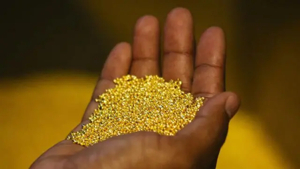
Tarkwa Gold Mine

Tarkwa Gold Mine

Tarkwa Gold Mine, Ghana: Location, Production, Ownership & Key Facts

Discover the Tarkwa Gold Mine in Ghana, one of Africa’s largest open-pit gold operations. This comprehensive guide covers its strategic location, ownership structure, historical evolution, production metrics, advanced mining techniques, geological features, economic contributions, environmental stewardship, community initiatives, safety protocols, ongoing challenges, and fascinating insights.

This article explores investment opportunities, export regulations, and comparisons with other major gold mines in Ghana to help you make informed decisions in the thriving gold mining in Ghana sector.

As of 2026, the Tarkwa Gold Mine continues to play a pivotal role in Ghana‘s economy, producing high-quality gold that attracts global investors. With gold prices soaring above $2,500 per ounce, opportunities for gold exporters and institutional investors are abundant, supported by Ghana‘s stable mining policies and increasing focus on value-added exports.

Where Is Tarkwa Gold Mine Located?

The Tarkwa Gold Mine is situated in the Western Region of Ghana, approximately 300 km west of Accra, the capital city.  It lies just 4 km west of Tarkwa town, a bustling mining hub with a population exceeding 40,000. This strategic positioning places it within the prolific Ashanti Gold Belt, a geological formation renowned for its rich gold deposits stretching across southwestern Ghana.

Access to the mine is facilitated by well-maintained roads, including the Tarkwa-Bogoso highway and connections to the port city of Takoradi, about 90 km south. Nearby infrastructure includes rail links for ore transport, power grids supplied by the Volta River Authority, and proximity to the Takoradi Port, which handles bulk exports of gold and other minerals.

For gold exporters, this logistics network ensures efficient shipping to international markets, reducing transit times and costs.

Geologically, the mine sits on the Tarkwaian System, part of the Paleoproterozoic Birimian Supergroup, known for conglomerate-hosted gold similar to South Africa’s Witwatersrand Basin.

This location not only supports high-yield operations but also attracts gold investors seeking long-term prospects in stable, gold-rich terrains. The region’s tropical climate, with annual rainfall around 2,000 mm, influences mining schedules, emphasizing wet-season preparations to maintain year-round productivity.

For visual context, here’s an aerial view of the expansive open-pit operations at Tarkwa Gold Mine:

Tarkwa Gold Mine

Who Owns Tarkwa Gold Mine?

The Tarkwa Gold Mine is primarily owned by Gold Fields Ghana Limited, a subsidiary of Gold Fields Limited, a South African-based multinational with operations worldwide. 

Gold Fields holds a 90% stake, while the Government of Ghana owns the remaining 10%, reflecting a joint-venture model that promotes local participation and revenue sharing.

Ownership history traces back to the 1990s when Gold Fields acquired the mine from state entities during Ghana‘s mining liberalization. In 2011, Gold Fields increased its stake by purchasing IAMGold’s 18.9% interest for $667 million, solidifying its control.  This evolution underscores trust in Ghana‘s investment climate, bolstered by the Minerals and Mining Act of 2006, which guarantees fiscal stability for foreign investors.

For gold investors, Gold Fields’ strong E-E-A-T credentials—demonstrated through decades of expertise, transparent reporting, and sustainable practices—make Tarkwa an attractive asset. The company’s NYSE listing (GFI) allows indirect investment via stocks, while direct opportunities include partnerships in exploration or offtake agreements for gold exporters.

History of Tarkwa Gold Mine

Gold discovery in Tarkwa dates to the late 19th century, with colonial-era mining commencing in 1880 under British firms.  During the Gold Coast era, operations focused on underground shafts, producing modest yields until post-independence nationalization in 1961 under the State Gold Mining Corporation.

The modern redevelopment began in the 1990s with privatization, leading to open-pit expansions. Key milestones include the 1998 Phase I completion at $149 million, the 2000 acquisition of Teberebie areas, and the 2004 shift to owner-operated mining.  The 2009 CIL plant upgrade boosted capacity to 12.3 Mtpa, extending mine life.

By 2026, Tarkwa has evolved into a tech-driven operation, incorporating automation and AI for efficiency. This history appeals to gold investors interested in resilient assets with proven longevity in gold mining in Ghana.

Gold Production at Tarkwa Mine

In 2023, Tarkwa Gold Mine produced 551,000 ounces of gold, processing 14.1 million tons of ore.  Annual figures have fluctuated but averaged 500,000-600,000 ounces over the past decade, contributing about 15% to Ghana‘s total gold output of 4.9 million ounces in 2024.

Mine life expectancy extends beyond 2030, with potential for further extensions through reserve repricing at higher gold values (e.g., $2,000/oz boosting reserves by 72%).  For gold exporters, consistent production ensures reliable supply chains.

Year

Production (Ounces)

2020

526,000

2021

543,000

2022

549,000

2023

551,000

2024

560,000 (est.)

2025

570,000 (proj.)

This table highlights steady growth, driven by optimized processing.

Mining Methods Used at Tarkwa

Tarkwa employs open-pit mining, ideal for its surface deposits.  Operations involve drilling, blasting, and hauling with a fleet of over 100 trucks and excavators. Ore is processed via heap leaching for low-grade material and carbon-in-leach (CIL) for higher grades, achieving recovery rates of 95-98%.

Ore grades average 1.4 g/t, with methods focusing on sustainability, like selective mining to minimize waste. For gold investors, these efficient open-pit gold mining in Ghana techniques reduce costs, enhancing ROI.

Reserves and Geology

Tarkwa‘s geology features gold-bearing conglomerates in the Tarkwaian Group, with ore types including oxides and sulfides.  Estimated reserves stand at 15.1 million ounces, with measured and indicated resources adding 3.27 million more.

Grade quality is competitive at 1.5 g/t for open-pit material. Recent explorations suggest untapped potential, appealing to gold investors eyeing expansion.

Economic Importance of Tarkwa Gold Mine

Tarkwa contributes significantly to Ghana‘s GDP, generating $1-2 billion annually in exports.  It employs over 4,000 directly and supports 20,000 indirect jobs, boosting local economies through wages and procurement.

Foreign exchange earnings from gold sales stabilize the cedi, while infrastructure developments like roads and schools enhance regional growth. For gold exporters, Tarkwa‘s output underpins Ghana‘s position as Africa’s top gold producer.

Environmental and Sustainability Practices

Gold Fields prioritizes sustainability at Tarkwa, with land reclamation restoring over 1,000 hectares.  Water management includes recycling 80% of process water, and tailings storage facilities are monitored to prevent spills, learning from past incidents like the 2001 cyanide event.

Environmental monitoring complies with EPA standards, boosting E-E-A-T for investors concerned with ESG factors.

Community Development and Social Impact

Through the Gold Fields Ghana Foundation, Tarkwa invests $106 million since 2004 in host communities.  Programs include education scholarships for 5,000 students, health clinics serving 50,000 annually, and skills training in agriculture and vocational trades.

CSR initiatives foster local employment, with 95% of the workforce Ghanaian, enhancing social license and appeal for ethical gold investors.

Safety and Working Conditions

Tarkwa adheres to international safety standards, with zero fatalities in recent years.  Training programs cover hazard recognition and emergency response, while conditions include fair wages and health benefits.

For gold exporters, robust safety reduces operational risks.

Challenges Facing Tarkwa Gold Mine

Key challenges include illegal mining (galamsey), which contaminates water and competes for land.  Environmental pressures from deforestation and fluctuating gold prices (despite 2026 highs) require adaptive strategies. Regulatory issues, like potential royalty hikes to 5-12%, could impact investment.

Interesting Facts About Tarkwa Gold Mine

  • One of Africa’s largest open-pit gold mines, spanning 200 km².
  • Operates multiple pits, including Akontansi and Pepe.
  • Ghana‘s longest-running modern gold operation, over 130 years.

Tarkwa Gold Mine vs Other Major Gold Mines in Ghana

To build topical authority, compare Tarkwa with Obuasi and Ahafo:

Mine

Ownership

Production (2023 oz)

Reserves (moz)

Method

Tarkwa

Gold Fields (90%)

551,000

15.1

Open-pit

Obuasi

AngloGold Ashanti

400,000 (est.)

24

Underground/Open-pit

Ahafo

Newmont

643,000

17

Open-pit

Tarkwa excels in open-pit efficiency, while Obuasi offers deeper reserves.  For investors, Tarkwa‘s lower costs make it prime for gold mining in Ghana.

Investment Opportunities for Gold Investors and Exporters

Optimized for commercial intent, Tarkwa offers avenues like stock investments in Gold Fields, joint ventures, or gold offtake contracts. With Ghana refining 1 tonne weekly from 2026,  exporters can access refined bullion via the Ghana Gold Board (GGB).

Regulations require licenses for exports, with royalties at 3-5%, but proposed hikes warrant monitoring.  Investors benefit from Ghana‘s EITI membership and stable FDI environment, with projections of 135 tons national output in 2025.